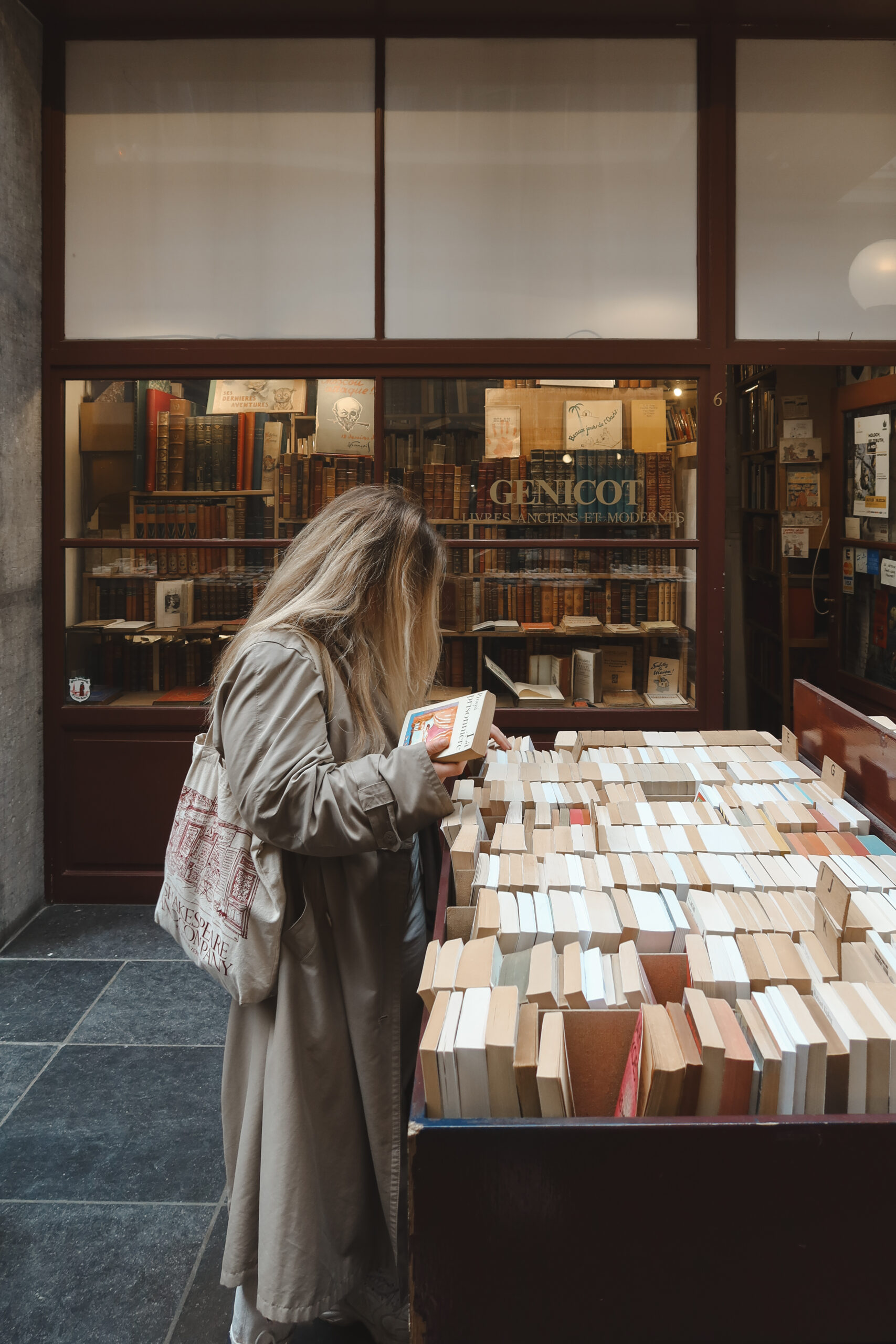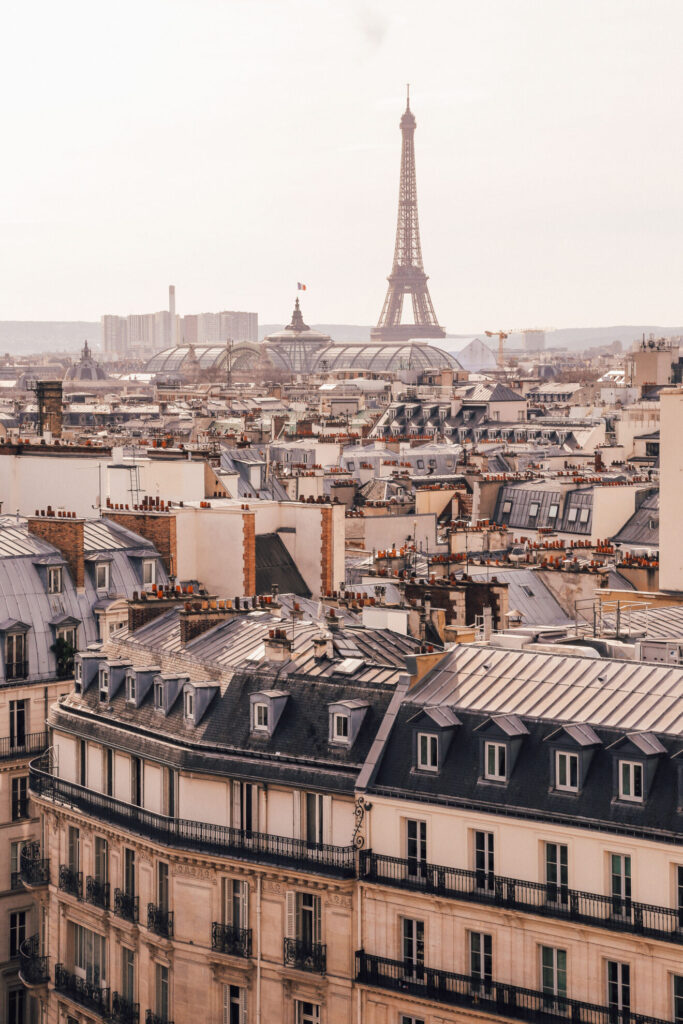
Paris sells an idea of itself better than almost any city in the world. You see it before you even arrive. A woman reading beside the Seine. Rain on café windows. A paperback tucked into the pocket of a wool coat. Green bookstalls opening in the morning light. Gold lamps glowing inside old bookstores.
For readers especially, Paris exists as mythology long before it becomes a real place. That mythology can be dangerous. Many travelers come to Paris expecting a permanent literary film set and leave disappointed by crowds, luxury storefronts and endless lines outside famous landmarks. Parts of the city now feel curated for performance rather than thought. Some literary places survive mostly as symbols of themselves.
And yet.
Paris still does something to readers that very few cities can. Not because every café contains a novelist. Not because Hemingway once rented a room nearby. Not because there are booksellers along the Seine. Paris remains literary because the city still understands slowness. It understands wandering without purpose. Sitting for hours. Reading in public. Spending an afternoon inside a bookstore without buying anything immediately. Walking simply to observe.
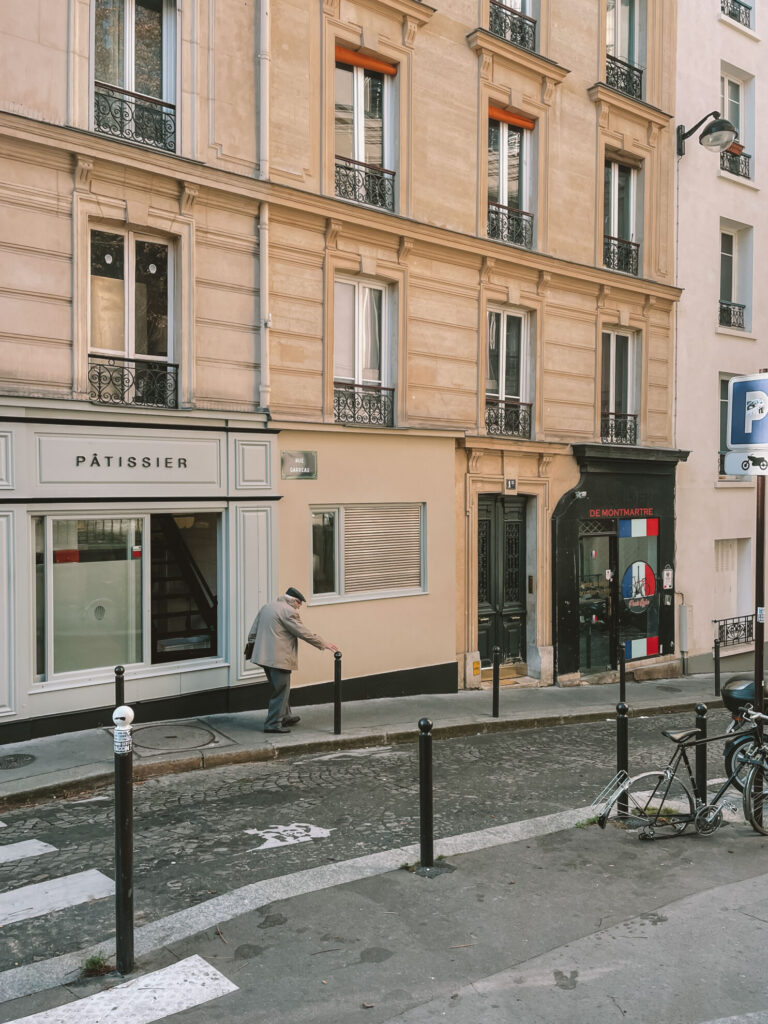
The real appeal of literary Paris is not nostalgia (only). It is the feeling that books still belong naturally within the life of the city. And in a time when many places feel increasingly transactional, rushed and algorithmic, that feeling becomes surprisingly powerful.
Why Paris Became a Literary City
Paris did not become literary by accident. The city was physically built in a way that encouraged intellectual life. Unlike newer capitals shaped around cars, business districts or speed, central Paris developed around walkability, public gathering and dense neighborhoods. Writers, students, printers, publishers and booksellers existed close to one another. Apartments were small, which pushed intellectual life outward into cafés, libraries and public squares.
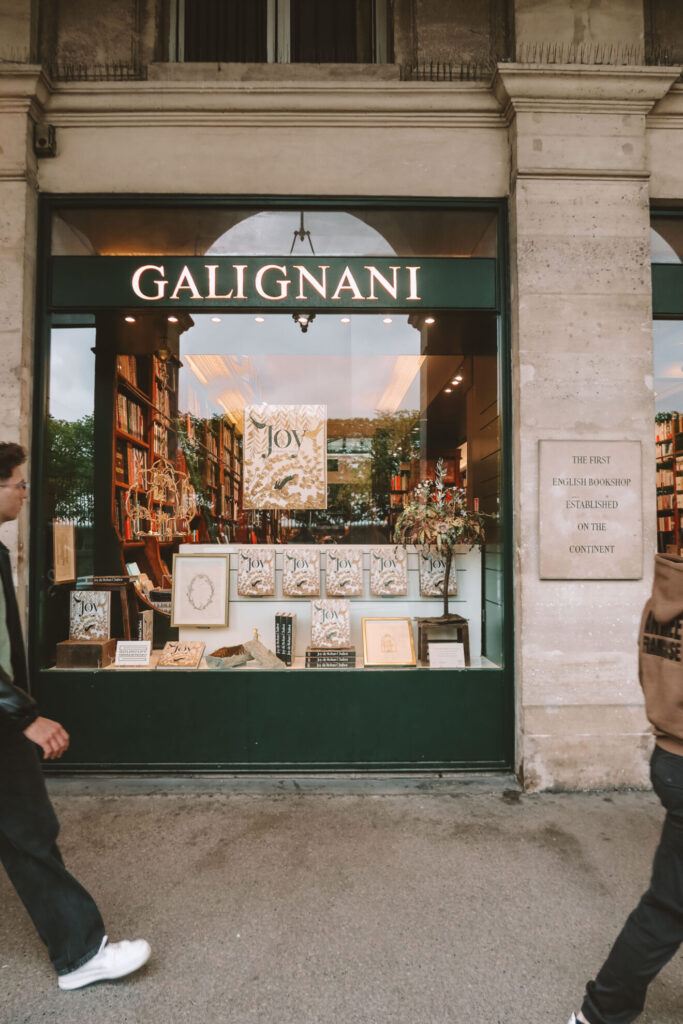
The Left Bank became especially important because universities, cheap housing and bookstores all overlapped geographically. The Latin Quarter was already associated with scholarship centuries before literary tourism existed. Students speaking Latin gave the area its name. Philosophers argued in cafés nearby. Printers and booksellers settled close to the Sorbonne. Ideas circulated through the streets almost physically. By the early twentieth century, Paris had become a magnet for writers partly because it offered freedom. American expatriates arrived searching for artistic independence. Modernist publishers found space to experiment. Small literary communities formed around bookstores and cafés rather than institutions.
But what made Paris truly literary was never just the presence of famous writers. It was infrastructure. Bookstores were treated as culturally important. Reading carried prestige. Publishing remained visible within urban life. Even today, France protects independent bookstores through fixed book pricing laws. Small bookshops survive in neighborhoods where they would have disappeared decades ago elsewhere. That continuity matters. Literary Paris still feels different from cities where bookstores function only as retail spaces.
In Paris, books remain part of cultural identity.
Is Paris Overrated for Book Lovers?
Sometimes, yes.
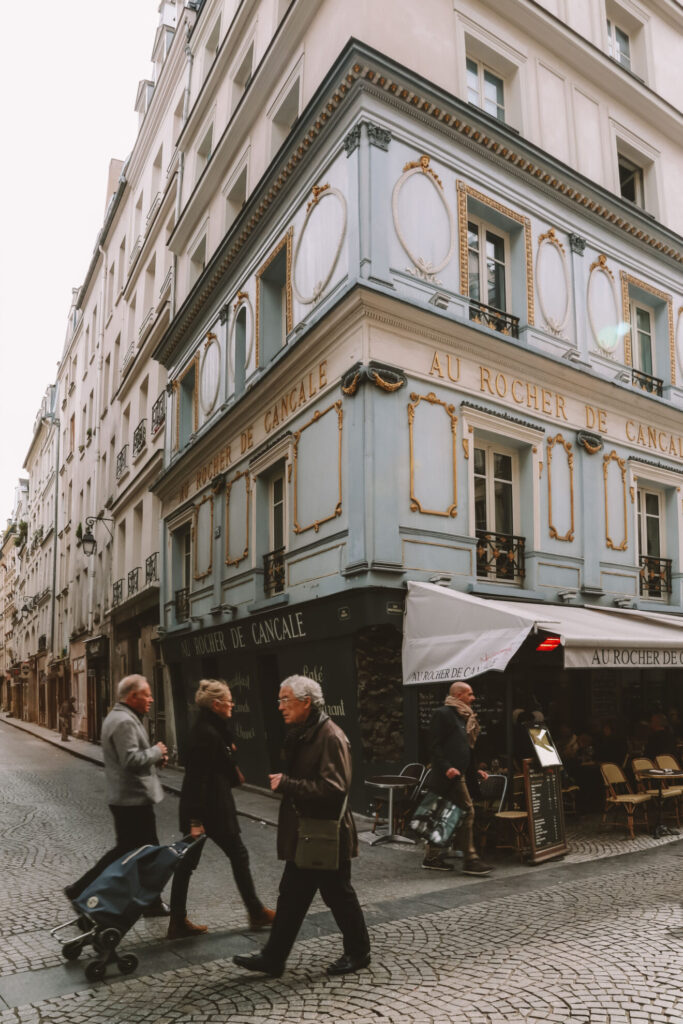
If you arrive expecting untouched bohemian romance, Paris can feel exhausting. The areas around Notre-Dame and Saint-Michel are often overcrowded. Café prices in Saint-Germain can feel absurd. Famous literary locations attract tourists more interested in photographing books than reading them.
There are moments when literary Paris seems flattened into aesthetic branding. But the city becomes far more interesting once you stop searching for cinematic perfection.
The literary atmosphere survives in quieter ways. You notice it while walking home through the Latin Quarter late at night when students are still talking outside cafés. You notice it in bookstores where staff recommendations feel personal rather than commercial. You notice it during rainy afternoons when people continue sitting alone with books instead of rushing through the day. Paris rewards readers who move slowly.
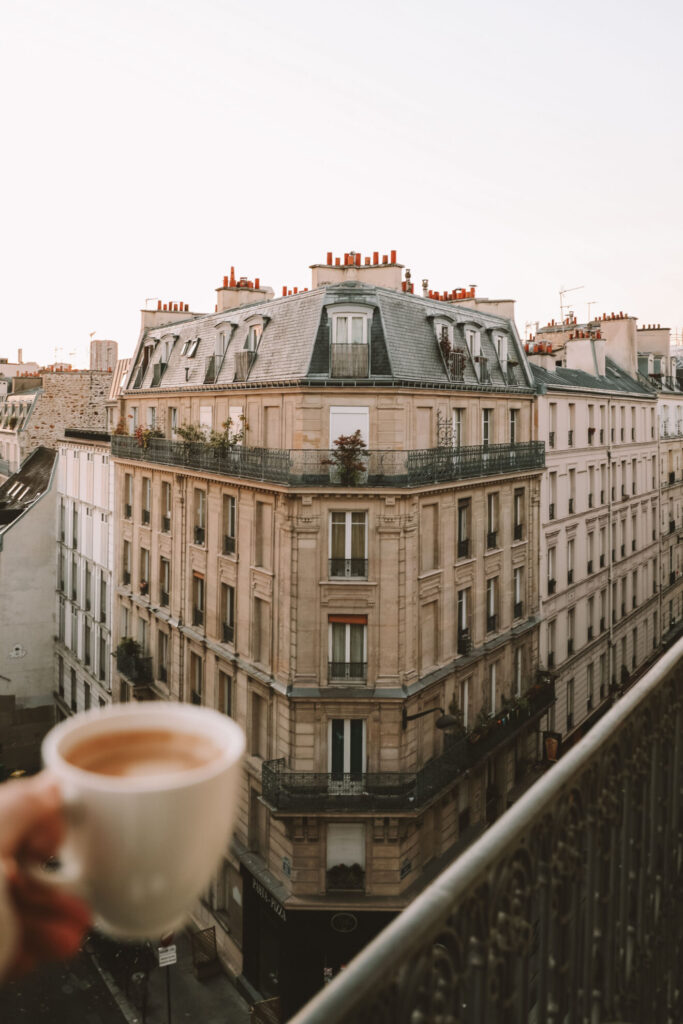
The city still supports forms of public solitude that have disappeared elsewhere. Cafés allow lingering. Parks encourage sitting for hours. Narrow streets invite wandering rather than efficiency.
For literary travelers, those details matter more than monuments. The most meaningful experiences in Paris are often strangely uneventful. Reading beside the Seine at dusk. Walking through Saint-Germain in winter rain. Finding a nearly empty bookstore on a side street. Watching light move across old apartment façades while turning pages in a café.
That is where literary Paris still lives.
The Best Neighborhoods in Paris for Book Lovers
The Latin Quarter
The Latin Quarter remains the symbolic heart of literary Paris, even if parts of it now feel heavily touristed. The key is learning how to move through it. Most visitors stay on Boulevard Saint-Michel, where souvenir shops and crowds dominate the atmosphere. But the neighborhood changes quickly once you turn into quieter side streets. Around Rue des Écoles or Rue Monsieur-le-Prince, Paris begins to feel more thoughtful again.
Bookstores appear between old university buildings. Students carry philosophy paperbacks covered in annotations. Posters advertise independent film screenings and literary events. The Latin Quarter works best early in the morning or later at night when the crowds thin and the intellectual rhythm of the area becomes visible again.
Saint-Germain-des-Prés
Saint-Germain is often criticized for becoming too polished and expensive to feel genuinely literary anymore. The criticism is partly deserved. Luxury boutiques have replaced many artistic spaces. Some cafés feel curated for nostalgia. Hotel prices are difficult to justify. And yet Saint-Germain still possesses one of the strongest literary atmospheres in the city.
Partly because of scale.
The streets remain intimate. The architecture encourages slowness. Light reflects beautifully against pale stone buildings at dusk. Small bookstores still survive between galleries and cafés. There is also something psychologically important about Saint-Germain.
The neighborhood still treats conversation and observation as part of public life. You feel less pressure to rush. Certain mornings in Saint-Germain still feel almost impossibly literary. Rain on café windows. Newspapers spread across tables. People reading quietly beneath soft yellow lighting. Not staged. Just deeply Parisian.
The 11th Arrondissement
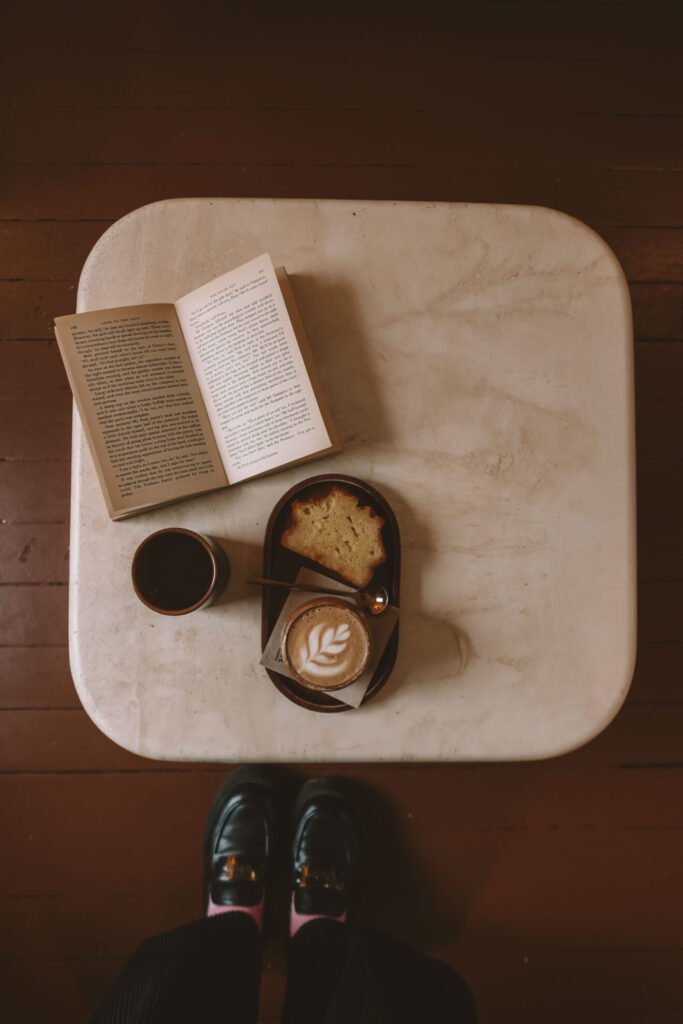
If the Left Bank represents historical literary Paris, the 11th arrondissement feels closer to the contemporary version. This is where many younger bookstores, independent cultural spaces and small publishing communities now exist. The atmosphere is less nostalgic and more alive. Cafés feel local rather than symbolic. Bookstores are smaller, more personal and often politically engaged. Conversations happen primarily in French. The literary culture feels lived-in instead of performed.
For travelers interested in where literary life actually exists now, this part of Paris is often more rewarding than famous historic districts.
The Best Bookstores in Paris
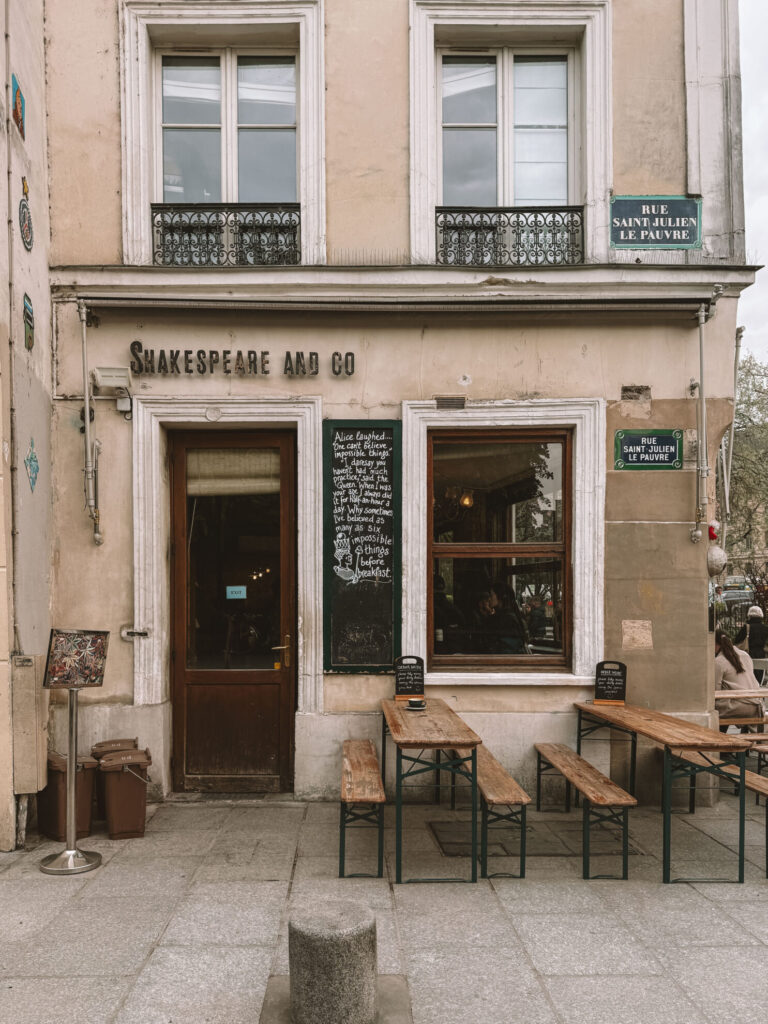
Shakespeare and Company
No bookstore in Paris is more photographed. And no bookstore divides opinion more sharply.
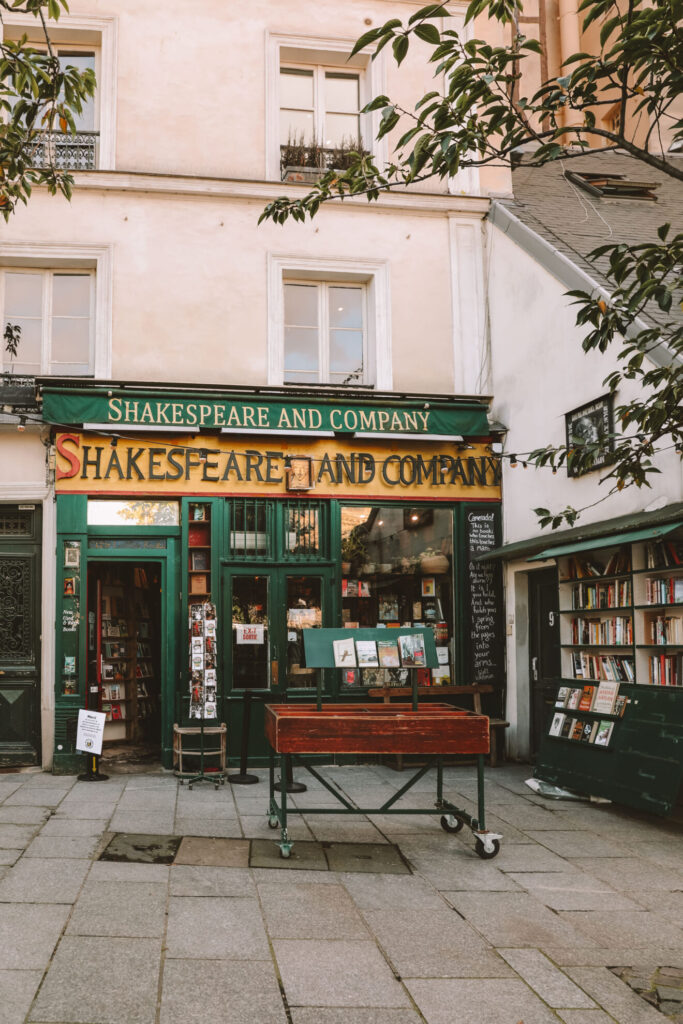
Yes, Shakespeare and Company can feel overcrowded. At peak hours, visitors line up outside simply to take photos. The romance sometimes collapses beneath the weight of tourism.
But reducing it to a tourist trap misses something important. The bookstore still represents a rare idea: that literature can create community across borders. Upstairs, away from the busiest rooms, the atmosphere changes. Old typewriters sit between shelves. Notes from visitors cover the walls. Small reading corners remain surprisingly quiet.
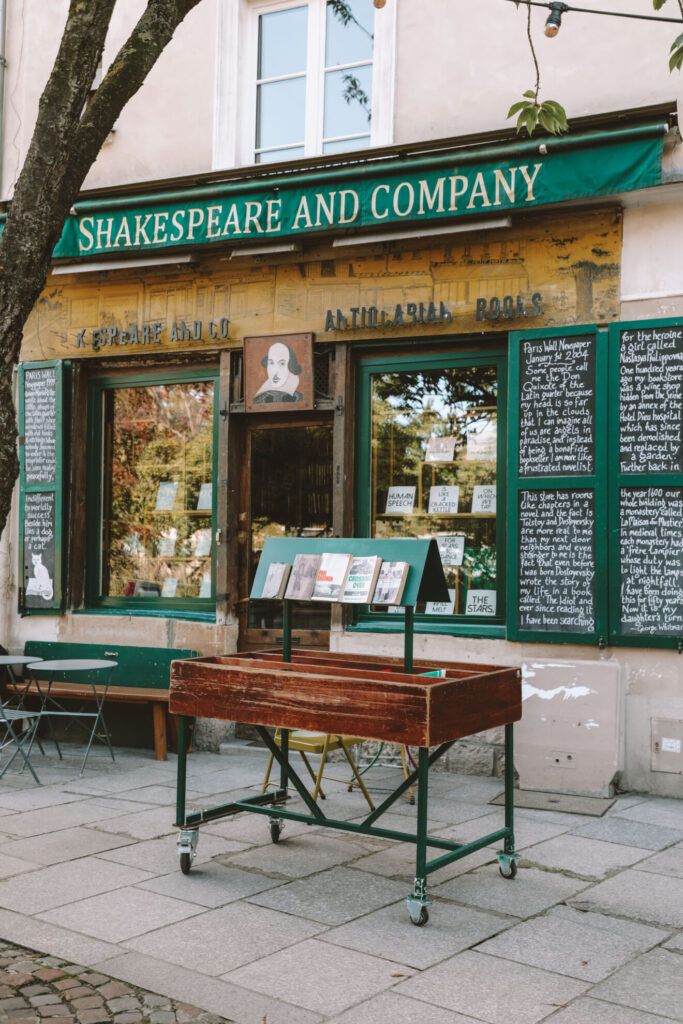
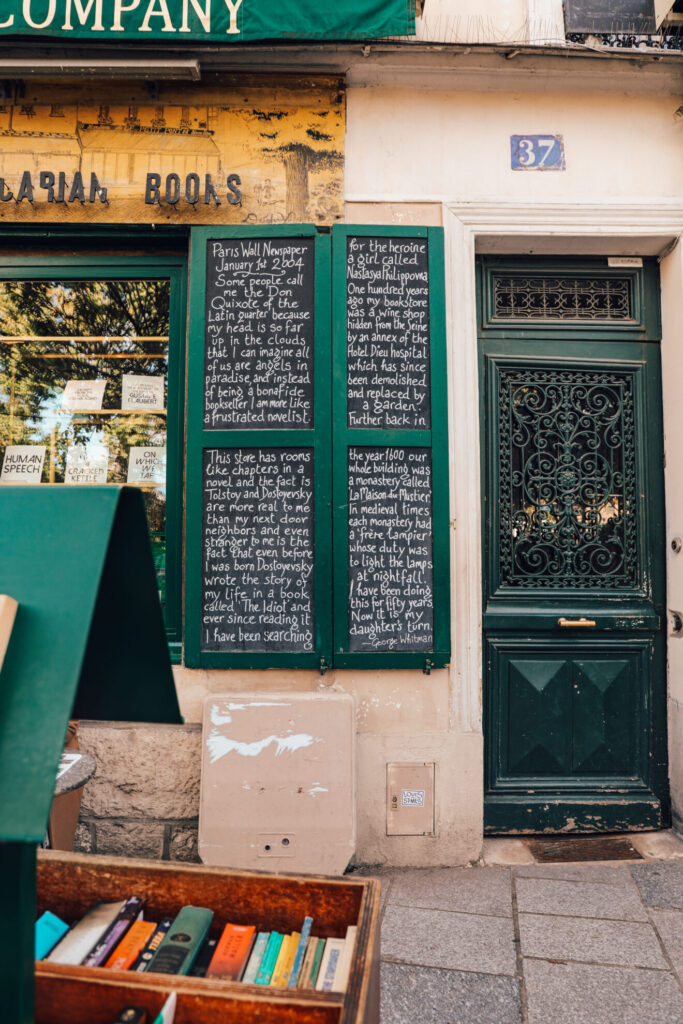
The store still attracts young writers, travelers and obsessive readers from around the world.
The best way to experience Shakespeare and Company is early in the morning before the crowds arrive. Treat it less like a shopping stop and more like a literary landmark.
Librairie Jousseaume
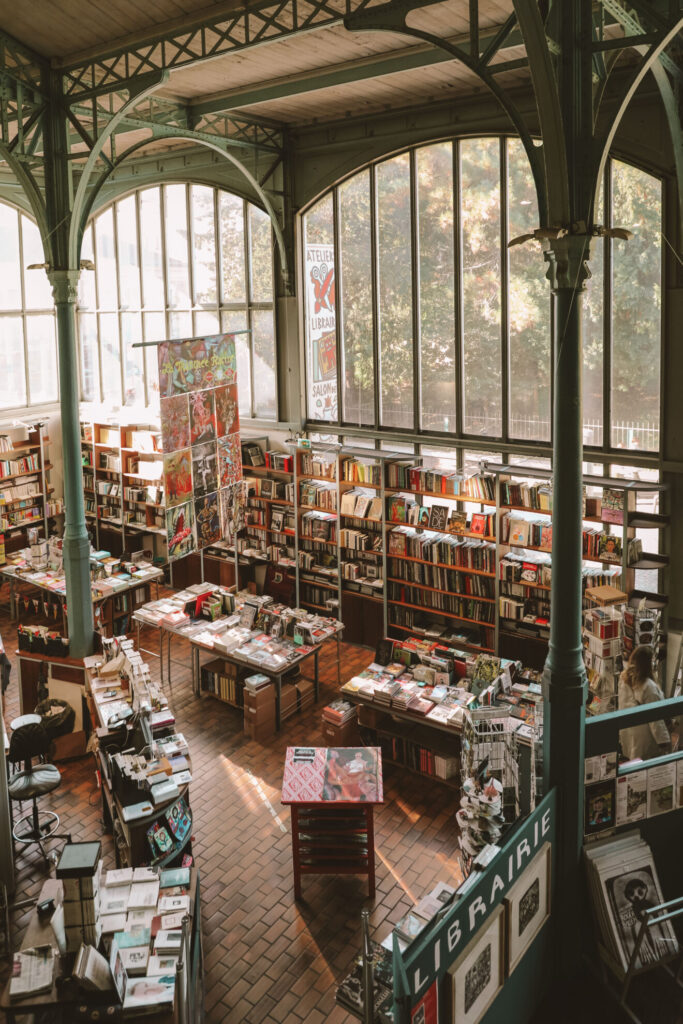
Inside Galerie Vivienne, Librairie Jousseaume feels almost suspended outside time. Dust hangs softly in the air. Rare books sit inside glass cabinets. Wooden ladders lean against shelves that seem impossibly tall.
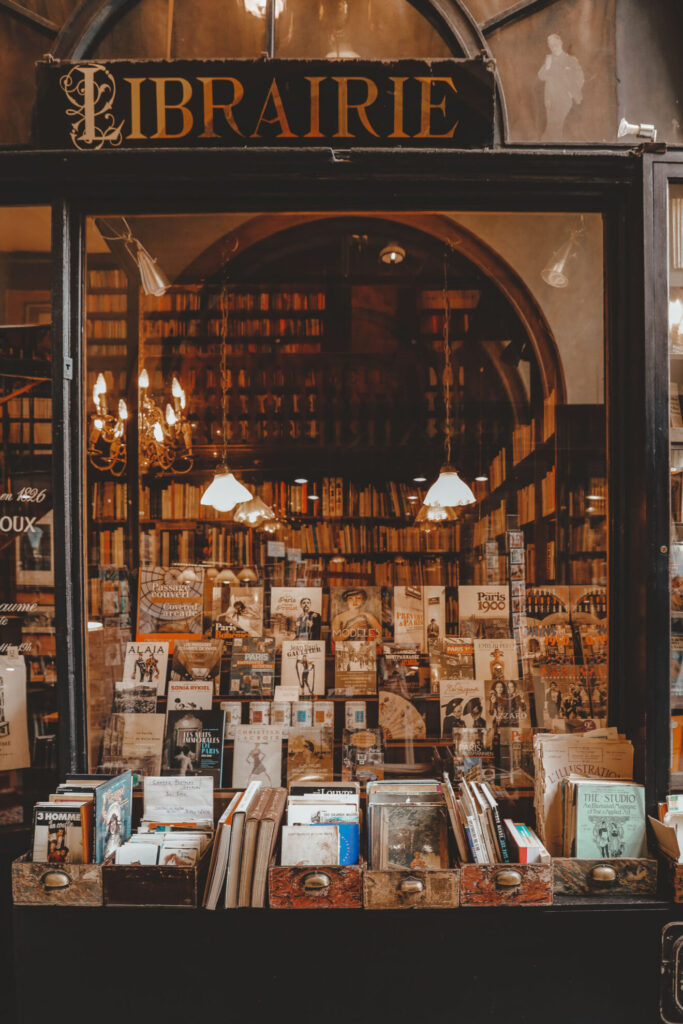
The bookstore is beautiful in the old Parisian sense of beauty. Even people who rarely buy rare books should visit simply to experience the atmosphere.
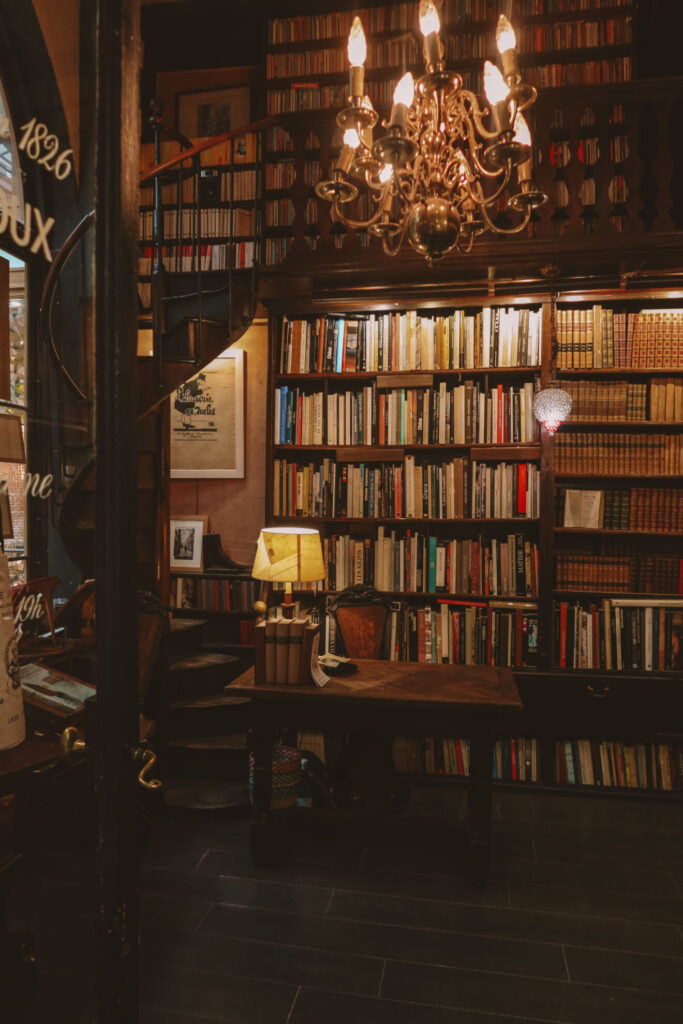
The surrounding arcade, with its tiled floors and filtered natural light, remains one of the most cinematic spaces in literary Paris.
Abbey Bookshop
Abbey Bookshop feels warmer and less self-conscious than many famous bookstores in Paris. Books overflow from every corner. The organization borders on chaos. Conversations happen naturally between strangers browsing shelves.
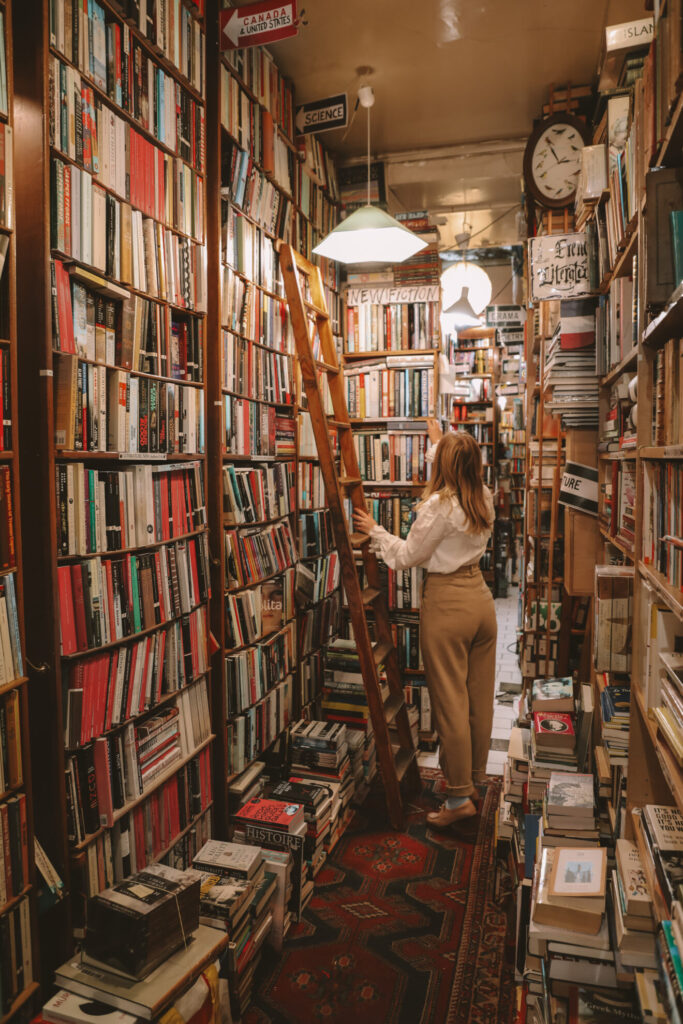
It feels like a bookstore built by readers rather than branding consultants. And increasingly, that distinction matters.
Smaller Independent Bookstores
Some of the best bookstores in Paris are the ones travelers discover accidentally.
Tiny neighborhood bookshops in the 11th arrondissement. Left Bank stores specializing in philosophy or cinema. Secondhand shops where books spill onto sidewalks. These places rarely appear on major travel lists. But they are often where literary Paris feels most authentic.
The Bouquinistes Along the Seine
The bouquinistes are one of the last things in Paris that still feel completely inseparable from the city itself. For centuries, booksellers have operated from green metal boxes lining the Seine. Tourists often treat them as decoration. But they remain culturally significant because they transform public space into literary space. Walking beside the river becomes a form of browsing. You stop unexpectedly for old postcards, philosophy paperbacks, vintage maps or faded poetry collections.
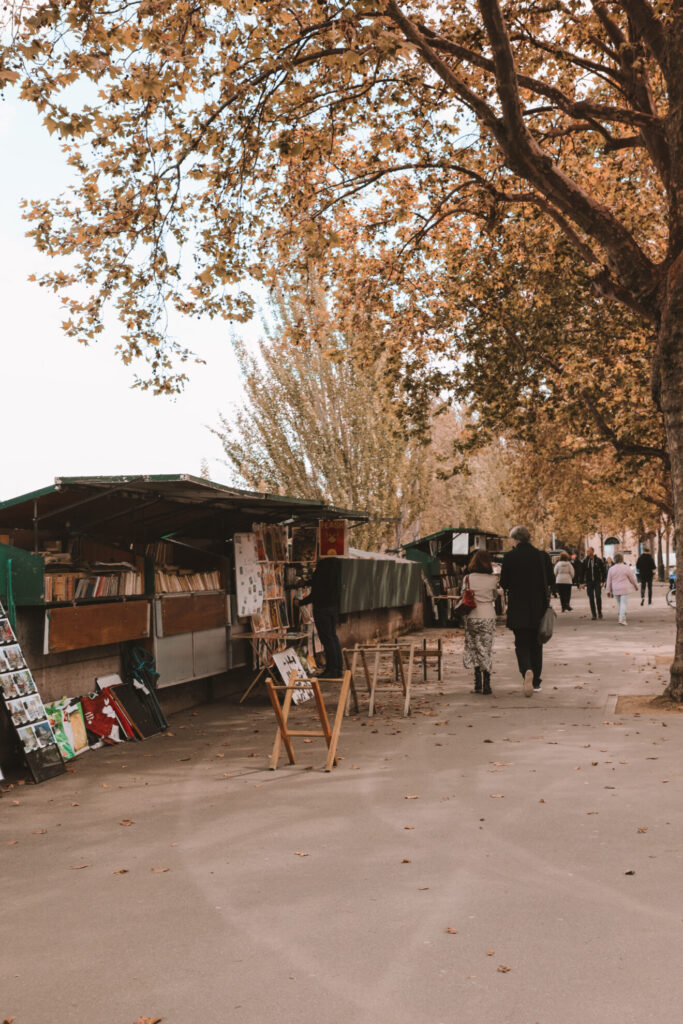
The experience feels slow and uncommercial in a way modern cities rarely allow anymore. Not every stall is extraordinary. Some sell mostly souvenirs. But the atmosphere matters more than the individual finds.
Late afternoon is the best time to walk the Seine.
Literary Cafés in Paris
The literary café remains central to the mythology of Paris. But the important thing about Parisian café culture was never just aesthetics. It was duration.
Writers could sit for hours with a single coffee. Reading in public felt natural. Conversation unfolded slowly. That culture still exists, though often more subtly than visitors expect.
Café de Flore
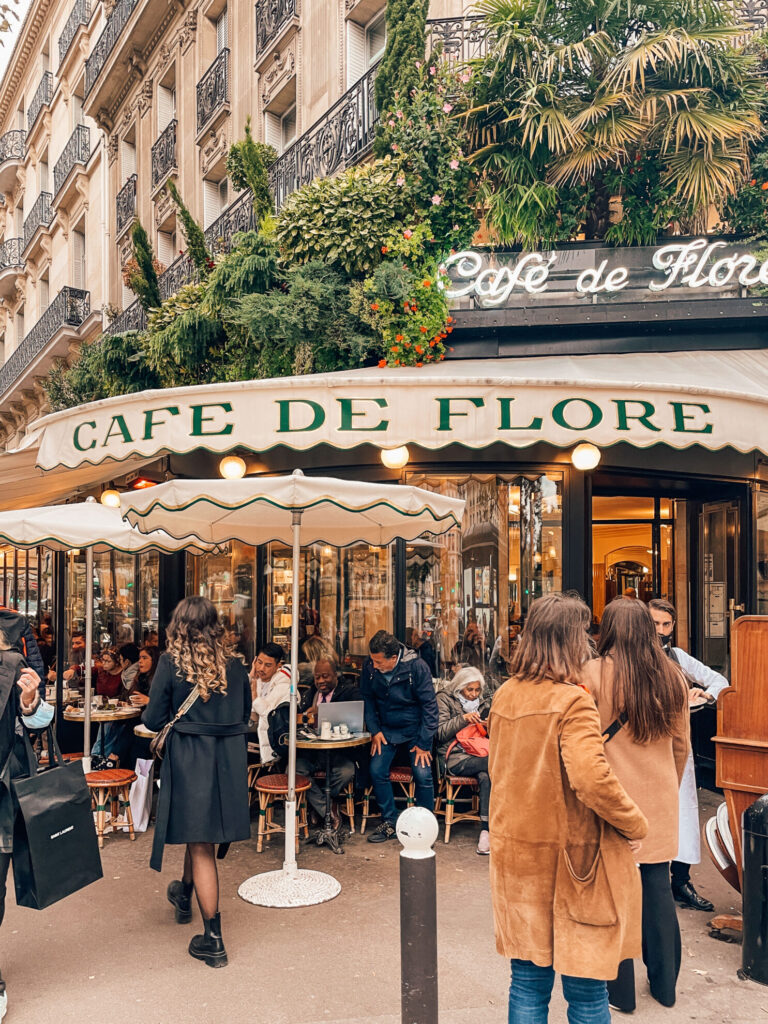
Café de Flore remains crowded and expensive. It is also still worth visiting. Not because Sartre once sat there. But because the café preserves a distinctly Parisian intimacy. Newspapers remain spread beside coffee cups. People still linger. Go early in the morning. Bring a book.
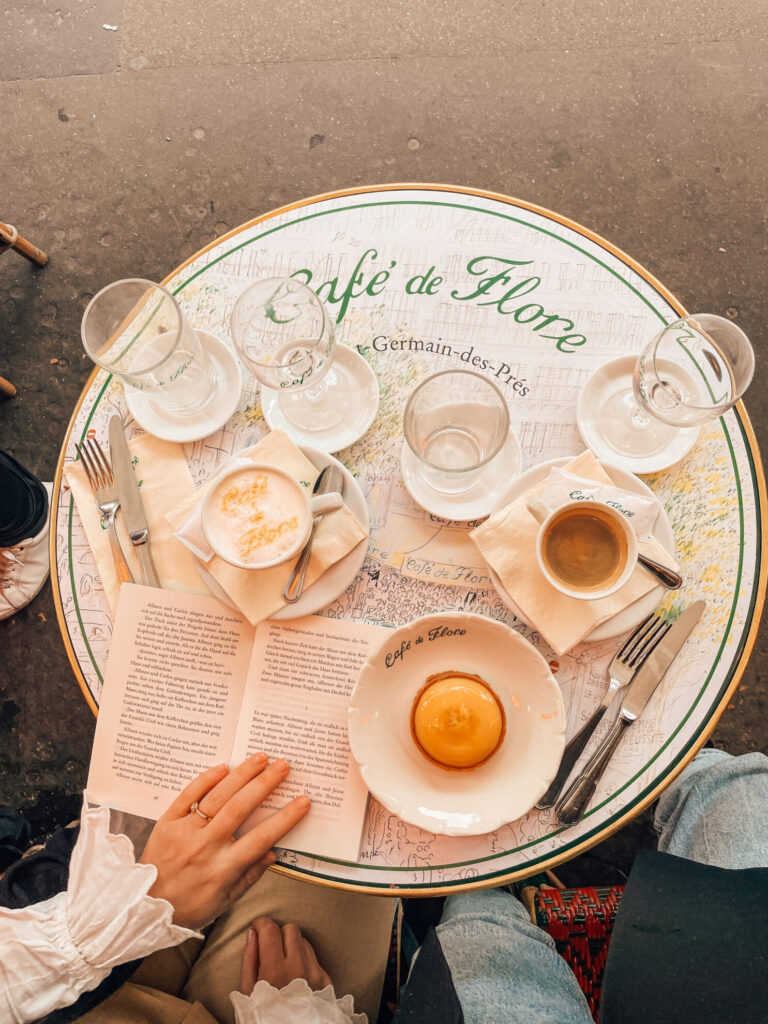
Les Deux Magots
Les Deux Magots feels more elegant than literary today. Still, the terrace remains one of the best places in Saint-Germain to observe the rhythm of the neighborhood. Reading here works less because of intellectual history and more because the surrounding streets naturally slow you down.
Smaller Neighborhood Cafés
The best literary cafés in Paris are often ordinary places with good lighting, patient staff and enough quiet to read comfortably for hours. Some of the most memorable afternoons happen in cafés nobody writes about. A rainy table near Canal Saint-Martin. An almost empty corner café in the Latin Quarter. A notebook open beside a glass of wine while evening settles over the street outside.
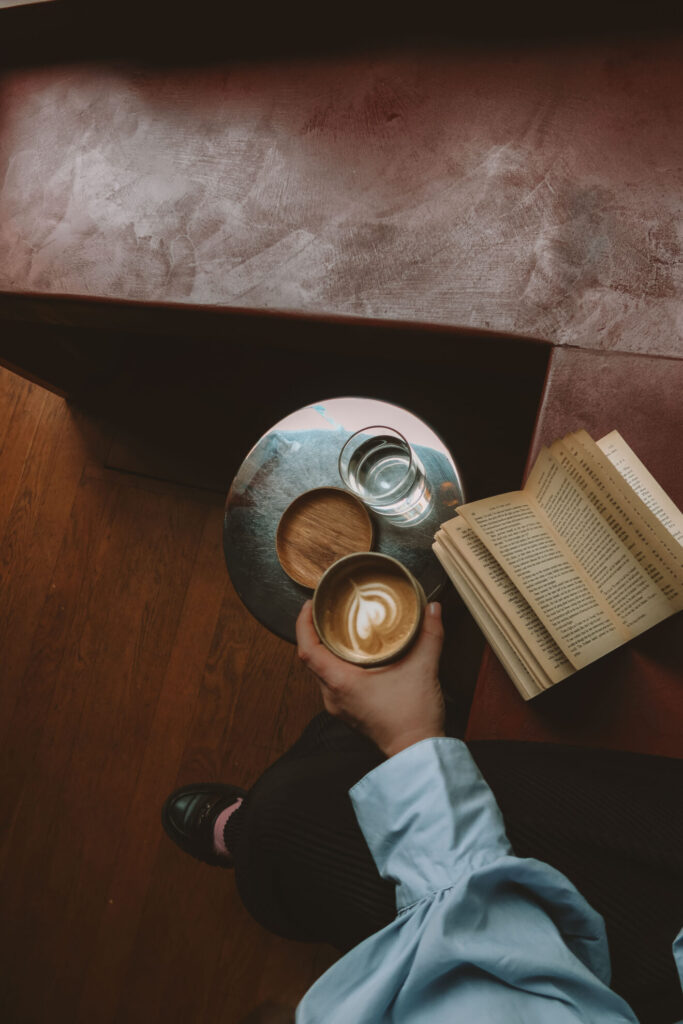
Paris still allows those moments.
Reading Spaces in Paris
One of the reasons Paris remains so attractive to readers is that the city accommodates solitary public life unusually well. You can spend hours alone without feeling conspicuous. That matters more than people realize.
The Jardin du Luxembourg remains iconic for a reason. Green chairs scattered around fountains create ideal reading conditions during spring and autumn. The Palais-Royal gardens feel quieter and more architectural. Reading there in late afternoon light can feel strangely cinematic. Parc Monceau offers another side of Paris entirely. Softer. More residential. Almost novelistic during autumn. And then there is simply the Seine itself.
Some of the best reading moments in Paris happen without planning. Paris understands how to create atmosphere around stillness.
Hidden Literary Corners Most Tourists Miss
Galerie Vivienne
The covered passages of Paris remain deeply connected to literary atmosphere.
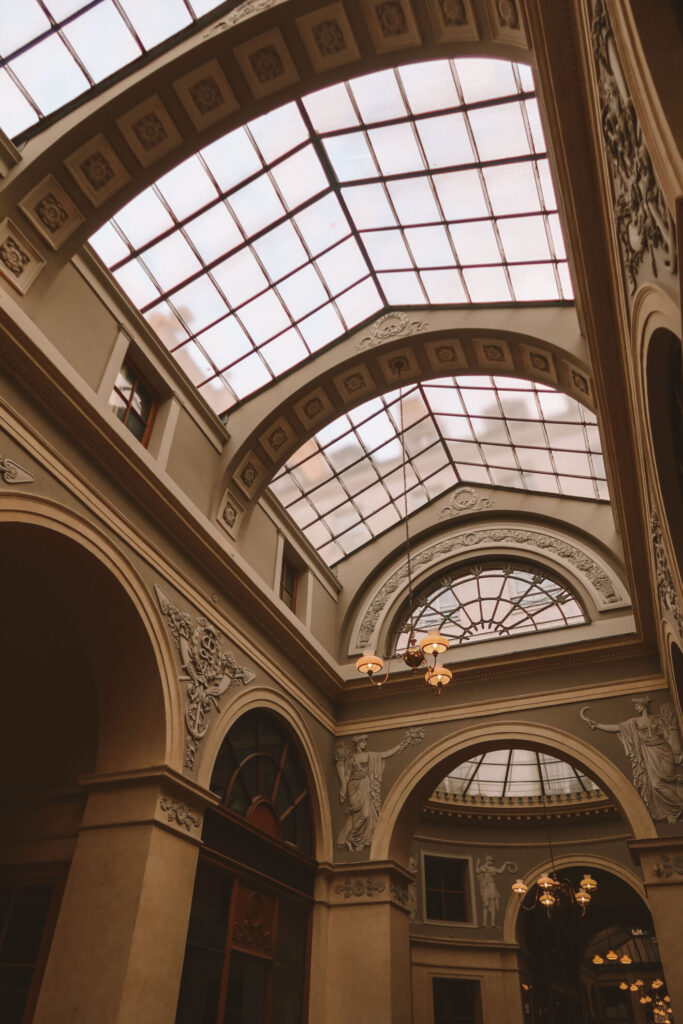
Galerie Vivienne especially feels suspended between centuries. Old tile floors, quiet arcades and bookshops create a mood that feels closer to nineteenth-century Paris than the modern city outside.
The Quiet Grandeur of BnF Richelieu
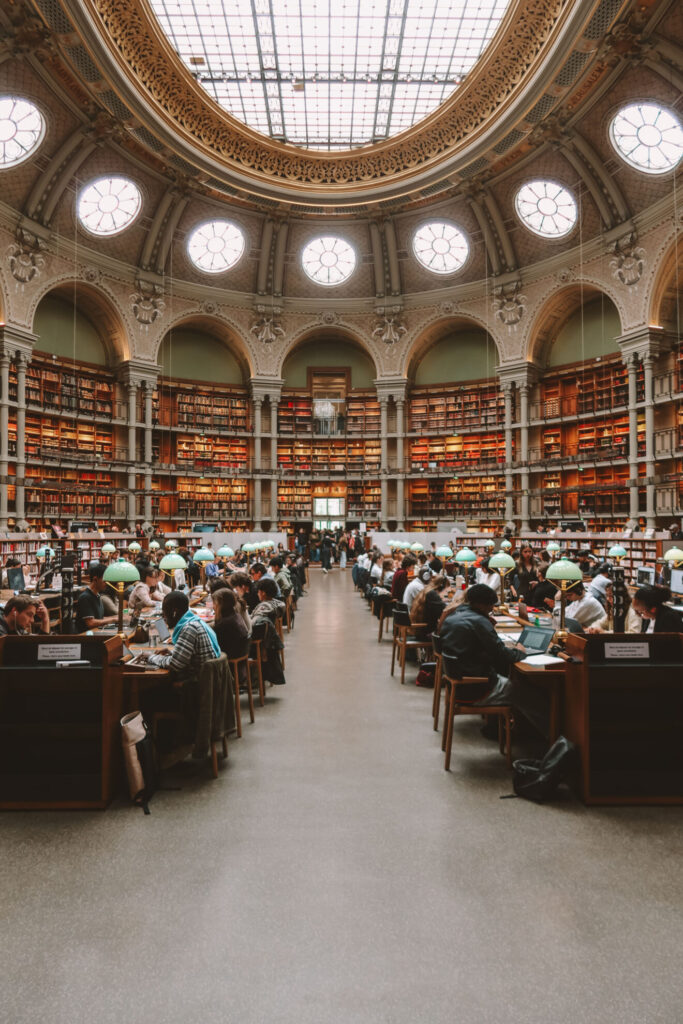
The BnF Richelieu feels different from the romantic Left Bank version of literary Paris. More formal. More architectural. But that contrast is part of what makes it fascinating. After its restoration, the historic reading rooms regained an almost overwhelming sense of scale and quietness. Gold details, painted ceilings and long wooden desks make the space feel less like a library and more like a monument to reading itself. Even if you only spend half an hour inside, it changes your sense of Paris slightly. You remember that this city did not only romanticize literature. It institutionalized it.
Rue de l’Odéon
This small Left Bank street carries enormous literary history. Sylvia Beach and Adrienne Monnier once operated influential bookstores here that shaped modernist literary culture. Today the significance is quieter. Which somehow makes it more moving.
The Panthéon Area at Night
Late evening around the Panthéon may be the closest Paris comes to fulfilling literary fantasy without irony. Students walk home carrying books. Street lamps glow against pale stone façades. Conversations drift through narrow streets. The city becomes quieter, softer and more introspective. This is the version of Paris many readers are actually searching for.
What Paris Feels Like as a Literary Traveler
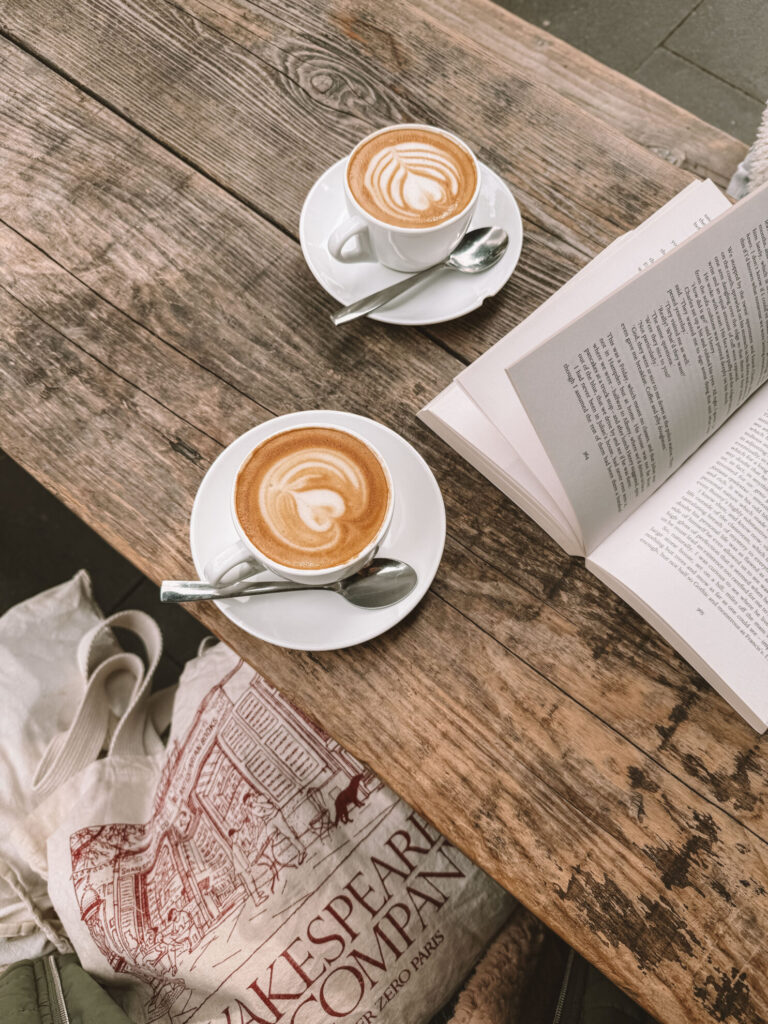
The most interesting thing about literary Paris is how physical the experience becomes. You notice textures more intensely. Worn staircases. Fogged café windows. The smell of old paper inside bookstores.
Paris rewards attention.
You notice details. And because of that, reading begins to feel integrated into the rhythm of the city instead of separate from it. This is why Paris still matters for book lovers. Not because it preserves the past perfectly. But because it still creates conditions where literary life feels possible.
Final Verdict: Is Paris Worth Visiting for Book Lovers?
Yes. Absolutely. But only if you understand what kind of literary city Paris actually is. Do not come searching for untouched bohemian nostalgia. Come for atmosphere. Come for bookstores embedded naturally into ordinary streets. Come for long afternoons in cafés. Come for the experience of wandering without needing to optimize every hour. Come because Paris still treats reading as part of cultural life rather than niche identity.
The best literary experiences in Paris are rarely dramatic. They happen quietly. Inside bookstores with creaking wooden floors. Beside the Seine at dusk. In cafés where nobody asks you to leave. Walking home through narrow streets with a book in your coat pocket.
That is the real magic of literary Paris.
FAQ: Paris for Book Lovers
Is Paris good for book lovers?
Yes. Paris remains one of the best cities in the world for readers because of its bookstore culture, literary neighborhoods, café life and atmosphere of slow urban wandering.
What are the best bookstores in Paris?
Some of the best bookstores in Paris include Shakespeare and Company, Librairie Jousseaume, Abbey Bookshop and smaller independent bookstores throughout the Left Bank and 11th arrondissement.
Is Shakespeare and Company worth visiting?
Yes, especially early in the morning before crowds arrive. Despite its popularity, it still retains genuine literary atmosphere.
What is the most literary neighborhood in Paris?
The Latin Quarter remains the historic literary center of Paris, while Saint-Germain-des-Prés and the 11th arrondissement offer strong contemporary literary atmosphere.
Are there literary cafés in Paris?
Yes. Café de Flore and Les Deux Magots remain iconic, but many smaller neighborhood cafés provide more authentic reading environments.
Where should book lovers stay in Paris?
The Latin Quarter, Saint-Germain-des-Prés, Canal Saint-Martin and parts of the 11th arrondissement all work well for literary travelers.
Internal Link Suggestions
- The Most Beautiful Bookstores in Europe
- Literary Cafés Worth Visiting in Europe (coming soon)
- Best Cities for Literary Travel
For more literary places, bookstores and atmospheric corners of Paris, you can also follow along on Instagram at @prettybookplaces.