


Every year, as December fades into January, my Instagram feed transforms into a glittering parade of shiny new reading goals. “30 books in 2025!” “52-week reading challenge!” “My 100-book TBR!” People post their numbers with pride, soft anxiety, or a mix of both.


And it always makes me pause.
What do reading goals actually do to us?
Do they motivate us? Inspire us? Stress us out?
Or do they make us quietly wonder, If I only read one book this year… am I even a reader?


Spoiler: Yes. Yes, you are.
The Many Faces of Reading Goals – According to You
Before writing this post, I asked my community on Instagram how reading goals make them feel. The answers were wonderfully diverse.

Some readers said reading goals feel like a personal challenge, something to look forward to, a way to stay focused or explore new genres. Others simply love the structure.
Just as many felt the opposite. For them, reading goals bring pressure or unrealistic expectations. Some said they ruin the joy of reading when taken too seriously, or they’re unnecessary because reading is therapy, not homework. A few admitted they buy more books than they could ever read, and goals only highlight that fact.
Then there were the in-between voices: reading isn’t a race, goals are flexible, reading should be enjoyable and not controlled by numbers. Beautifully human answers, all of them.
Why Reading Goals Can Be Amazing

Reading goals can create momentum. When you have a number or a list, it’s easier to pick up a book instead of your phone. They can expand your reading world, pushing you towards genres you might usually ignore. They satisfy the inner organizer too, tracking progress can be surprisingly soothing. And of course, goals can build community. Sharing them brings connection and conversation.
Why Reading Goals Can Backfire

But goals have a shadow side. They can turn reading from pleasure into pressure. Suddenly you’re comparing your pace to others, even though no one is actually competing. They can also limit your choices, making you reach for shorter books just to keep up. And when reading starts to feel like homework, something precious is lost.
Many responses captured this perfectly: goals are good for staying focused, but too much structure can ruin the joy.

My Personal Relationship With Reading Goals
Let me be honest. I visit so many bookshops, bookstores, libraries, book cafés, and bookish corners that I am constantly buying new books and I never finish my reading goals. Not once. And it doesn’t bother me.
I’m a feelings-driven reader. A mood reader. A place reader. I read every day, but not in the same rhythm. Some weeks I devour books like midnight snacks. Other weeks I drift, reading a few pages and enjoying the atmosphere around me, the café, the train, the quiet corner of a bookstore.

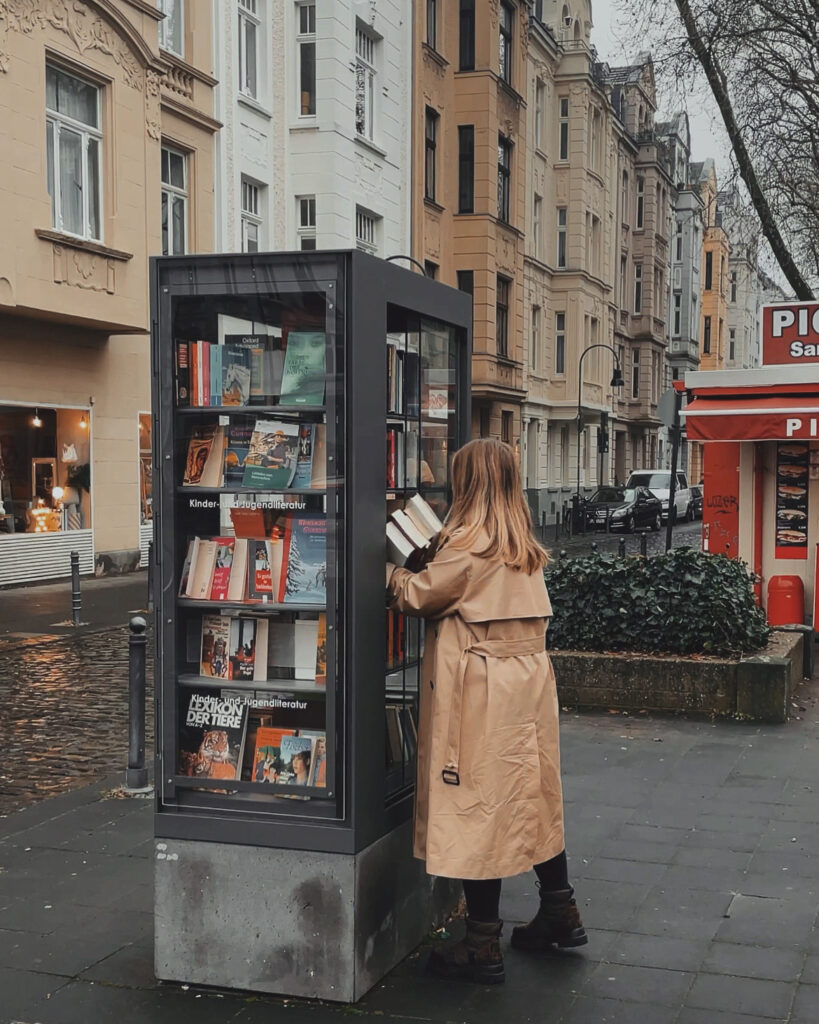
My reading identity doesn’t live in numbers. It lives in places. In moments. In how a story meets me exactly where I am.
So a reading goal? For me it’s a polite suggestion I stop taking seriously sometime in February.
So… Who Counts as a Reader?

Let me say this clearly and wholeheartedly:
If you read one book this year, you are a reader.
If you read 200 books this year, you are a reader.
If you read slowly, quickly, occasionally or only when the mood is right – you are a reader.
Reading is an identity, not a statistic. A relationship, not a race.
A single book can change you more than a list of fifty.
Your reading life is yours.
Choosing a Reading Goal That Fits You

Reading goals are tools. They’re not meant to judge you. They can inspire, motivate or gently guide you, but they can also stress you if they don’t match your reading identity.
Maybe your perfect reading goal is a flexible number. Maybe it’s exploring a new genre. Maybe it’s simply “read when I feel like it.” Or maybe it’s no goal at all.
There is no wrong choice. Only your choice.
Final Thought

Reading goals can be delightful, motivating, frustrating, or completely irrelevant. What truly matters is not the number of books you read this year, but the world you step into every time you open one.
And maybe the most meaningful reading goal is simply this:
Read in a way that feels like you.