


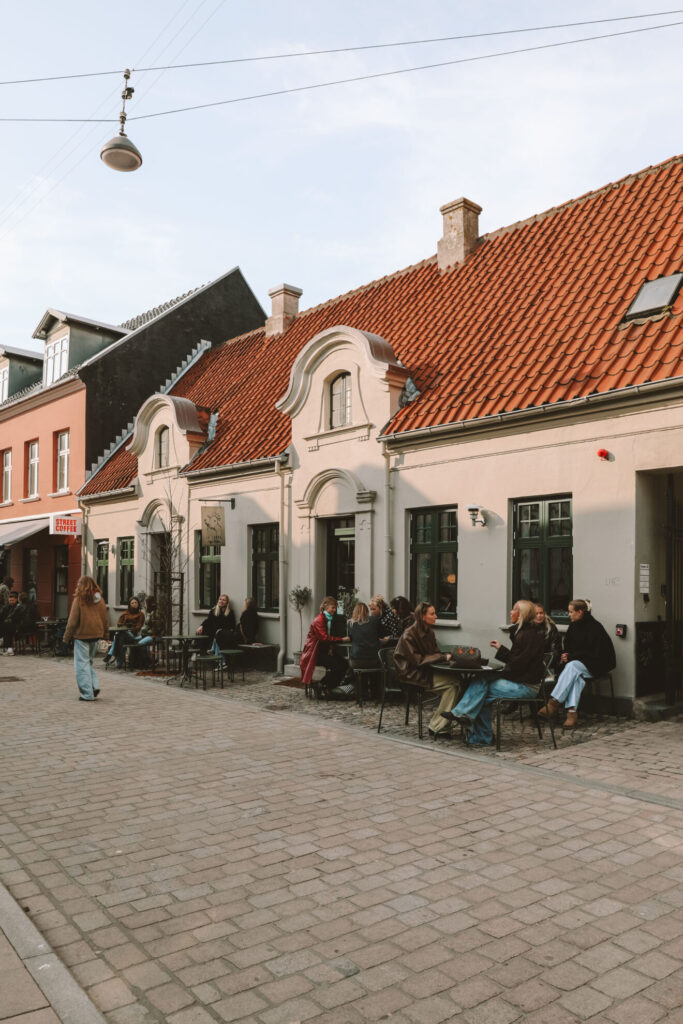
Aarhus literary travel is less about literary landmarks and more about literary culture.
Few cities make culture feel this ordinary.
Not ordinary in the sense of unremarkable, but in the way books, architecture, coffee and public space are treated as everyday essentials rather than cultural luxuries.
In Aarhus, Denmark’s second-largest city, reading by the waterfront is part of an ordinary afternoon. Libraries function as living rooms, independent bookshops remain places for conversation and discovery, and some of the city’s best cafés seem designed for lingering over a novel rather than rushing through a takeaway coffee. Design is not confined to museums, and culture is not reserved for special occasions. Both are part of daily life.

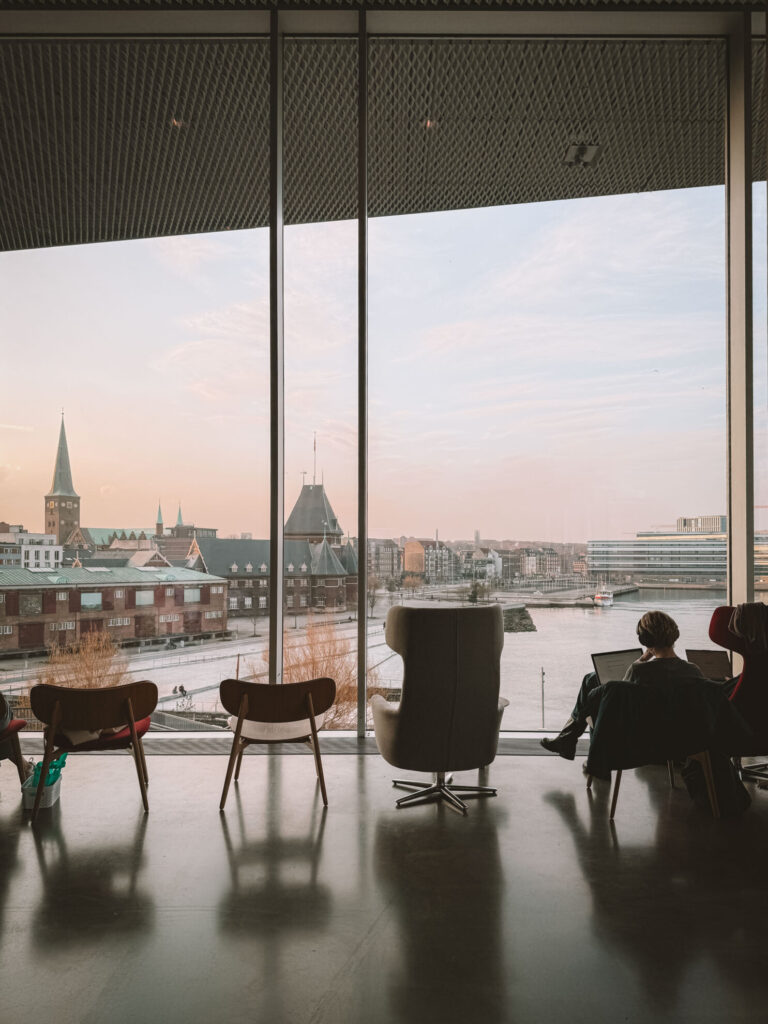
Many European cities are celebrated for their cultural institutions. Aarhus is memorable because of how effortlessly those institutions connect to the rhythms of everyday life. A morning might begin inside a waterfront library, continue with an hour spent browsing books in the Latin Quarter and end over coffee in a thoughtfully designed café. None of it feels planned. None of it feels performative.
What makes Aarhus distinctive is that culture feels present without feeling performative. The city is intellectually curious without being academic, design-minded without being self-conscious and cultural without being heavy.
For readers, creatives and design-conscious travellers, Aarhus offers something increasingly difficult to find: a city where culture feels lived in rather than curated.
Why Aarhus Literary Travel Feels Different
Many cities advertise their cultural credentials at every opportunity. Aarhus wears them lightly.
Its museums attract international visitors, its architecture is studied by urban planners and its coffee scene is respected far beyond Denmark. Yet the city’s greatest strength is not any individual attraction. It is the way these elements exist alongside one another, shaping an urban experience that feels both sophisticated and approachable.
Unlike Copenhagen, which often carries the confidence of a capital city, Aarhus feels more intimate. Unlike Berlin, it does not define itself through constant reinvention. Unlike Paris or London, it does not ask visitors to navigate centuries of cultural mythology. Instead, Aarhus offers something quieter and, in many ways, more contemporary: a city where culture feels integrated rather than institutional.
The scale plays an important role. Most of the places that define Aarhus can be reached on foot or by bicycle. Distances feel manageable. A visit to a museum rarely requires crossing the entire city. A bookstore, café or library is usually only a few streets away.
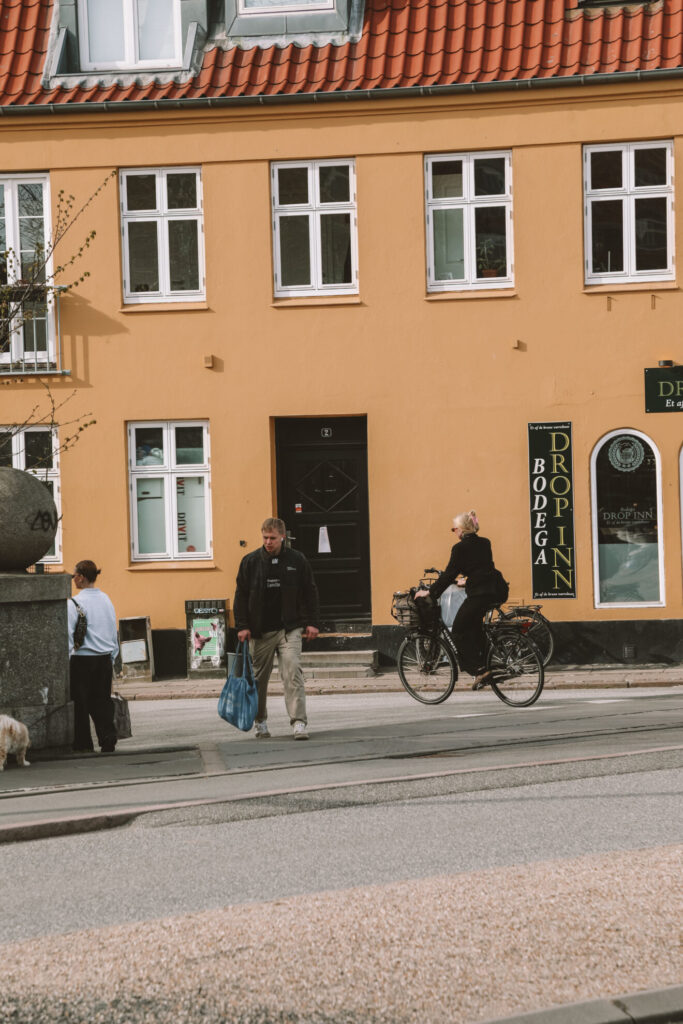
This creates a different kind of urban experience. Rather than moving between attractions, visitors move through neighbourhoods. The city encourages wandering. A coffee stop becomes an hour of reading. A visit to a bookstore turns into an afternoon spent exploring nearby streets.
Aarhus feels distinctly Scandinavian, but without the self-conscious cool often associated with larger Nordic capitals. It is design-minded yet relaxed, creative yet approachable, cultured without becoming exclusive. The result is a city that feels easy to inhabit, even temporarily.
Aarhus Literary Travel for Book Lovers
For book lovers, Aarhus offers something increasingly rare: a reading culture that remains visible in public life.
You see it at Dokk1, the city’s remarkable waterfront library. You see it in cafés where customers spend long stretches of time with novels and newspapers. You see it in independent bookstores that continue to function as community spaces rather than simple retail environments.
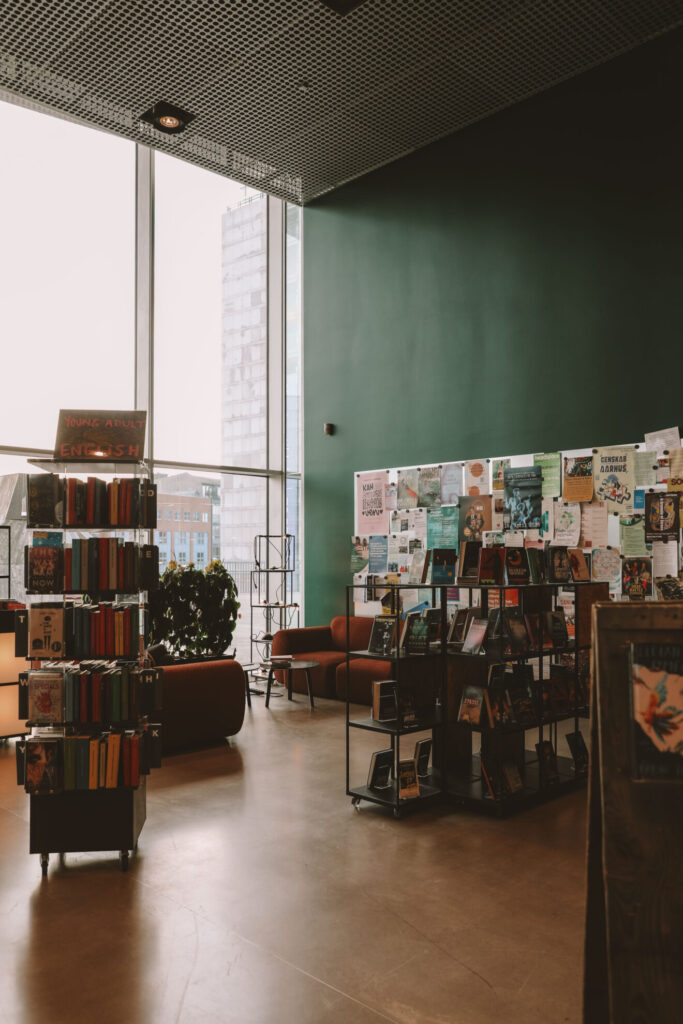
Reading feels present here.
Not celebrated as a niche interest. Not packaged as an attraction. Simply present.
Many literary destinations rely heavily on history. Visitors arrive to follow in the footsteps of famous authors, visit preserved homes or explore literary landmarks. Aarhus offers a different model of literary travel. Its appeal lies less in literary heritage and more in literary culture.
The city feels like a place where people still read.
That atmosphere is shaped by Aarhus University, Denmark’s strong public library tradition and a broader cultural attitude that values curiosity, education and public access to knowledge. But it is most visible in everyday moments: someone reading beside the harbour, students carrying books between lectures, customers discussing recent releases in independent bookshops.
For travellers interested in literary cities in Europe, Aarhus presents an appealing alternative to more obvious destinations. It demonstrates that literary culture is not only something preserved from the past. It can also be something actively lived in the present.
Dokk1: The City’s Living Room
If there is one place that captures the spirit of Aarhus better than any other, it is Dokk1.

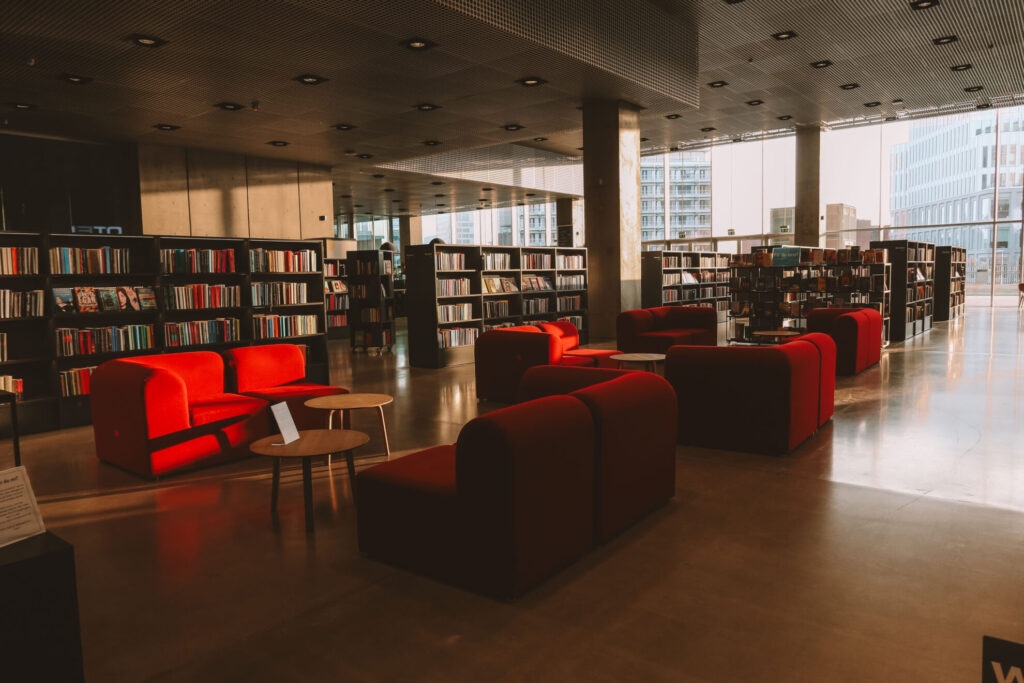
Situated directly on the waterfront, the building serves as a library, community centre, meeting place and public gathering space. Yet none of those descriptions fully explain why it matters.
What makes Dokk1 remarkable is not its architecture, although the architecture is impressive. It is not even its collection of books. It is the way people use it.
On any given day, students work at long communal tables overlooking the harbour. Families gather in shared spaces. Residents stop by to read the newspaper, meet friends or simply spend time. Visitors arrive expecting a library and discover something closer to a civic living room.

Few buildings illustrate the Scandinavian approach to public space more effectively.
Dokk1 is open, welcoming and deeply integrated into daily life. It reflects a belief that culture should not be separated from ordinary experience. Instead, it should be available, visible and easy to access.
In many cities, libraries feel increasingly peripheral. In Aarhus, Dokk1 occupies one of the most prominent locations in the city. That choice says a great deal about local priorities. Books, learning and public life are not treated as secondary concerns. They are placed at the centre.
The Best Bookstores in Aarhus
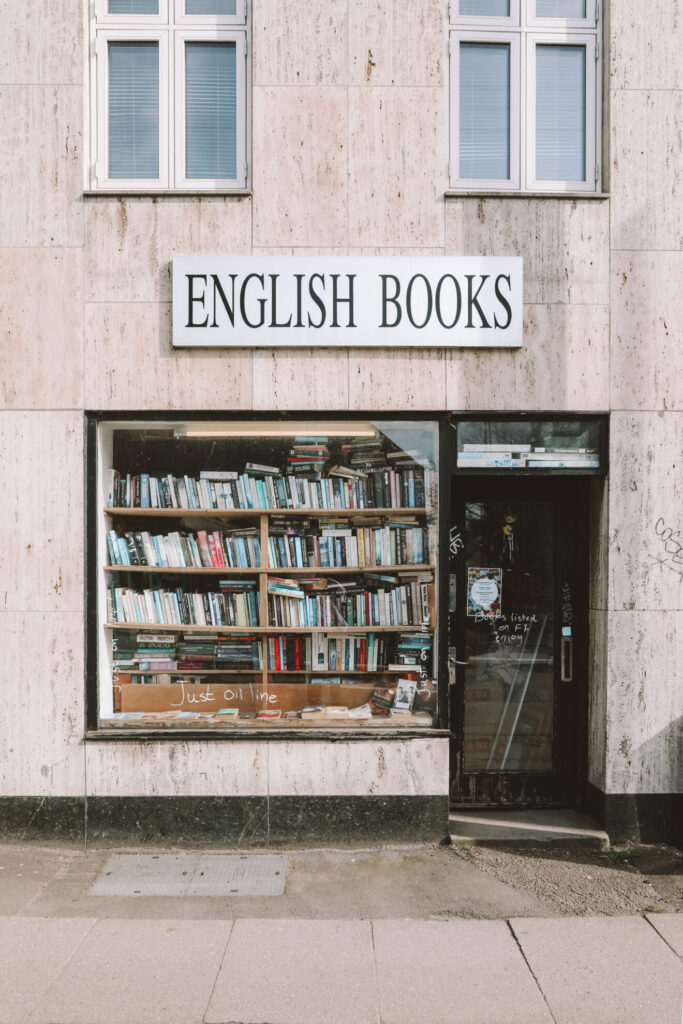
One of the greatest pleasures of Aarhus literary travel is discovering the city’s independent bookstores. They are not simply places to buy books. They are places to browse, linger and occasionally lose track of time.
Kristian F. Møller
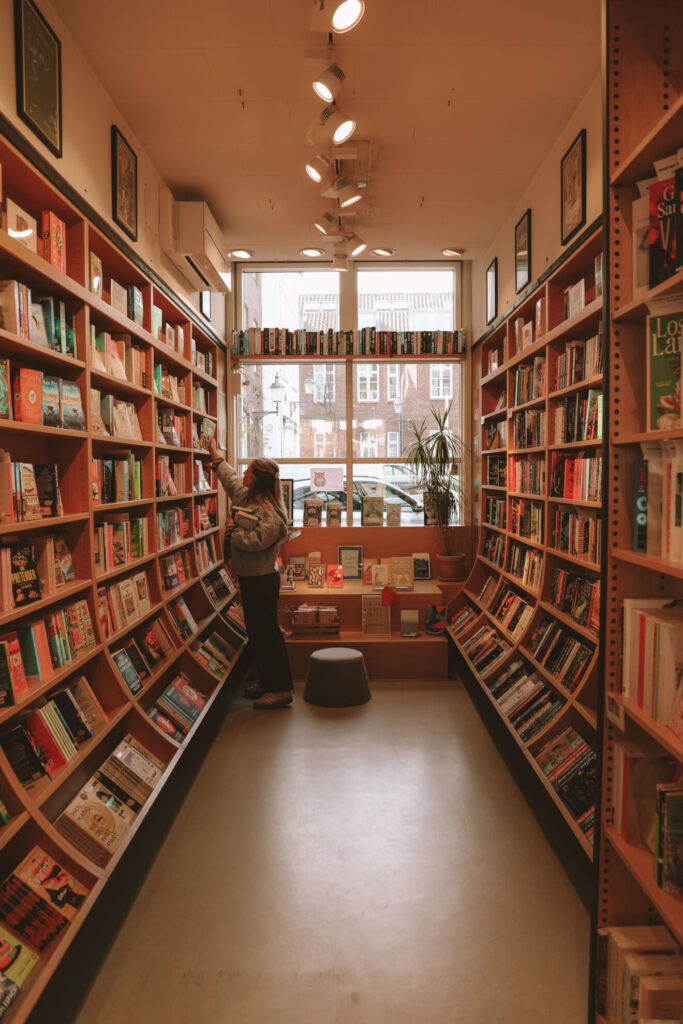
For many readers, Kristian F. Møller is the natural starting point.
Established in 1920, the bookstore has long been part of Aarhus’ intellectual and cultural landscape. Inside, shelves are filled with literature, history, design, architecture and contemporary non-fiction. New Scandinavian fiction sits alongside travel writing, philosophy and beautifully produced art books.
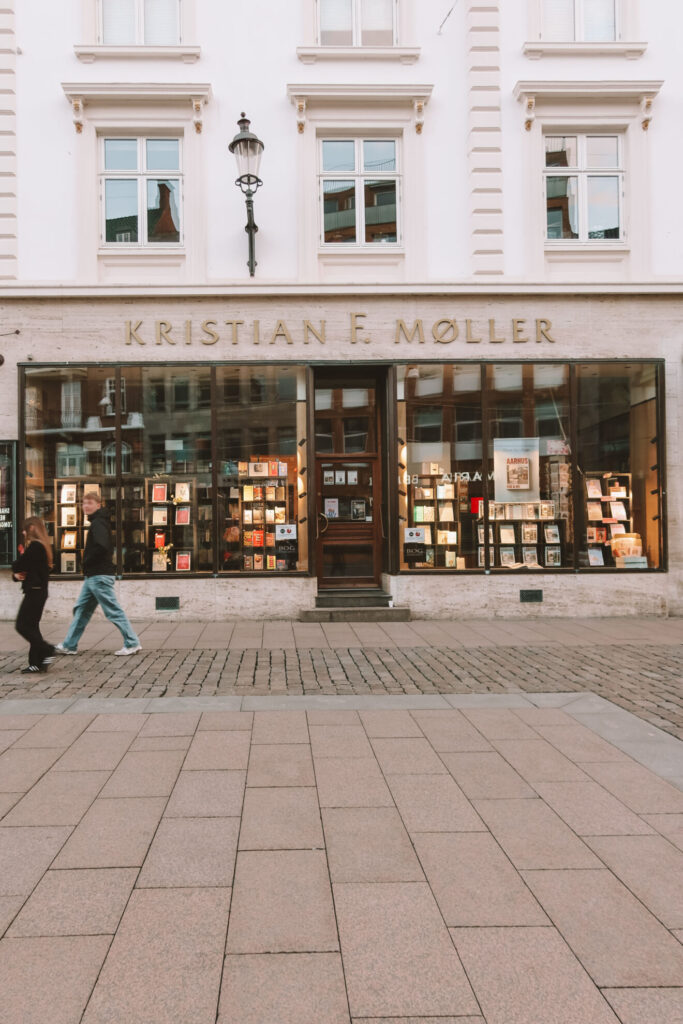
Customers move slowly between sections, often leaving with something entirely different from what they intended to buy. More importantly, it still feels like a place built for readers.
Bogshoppen
Bogshoppen offers a different experience.
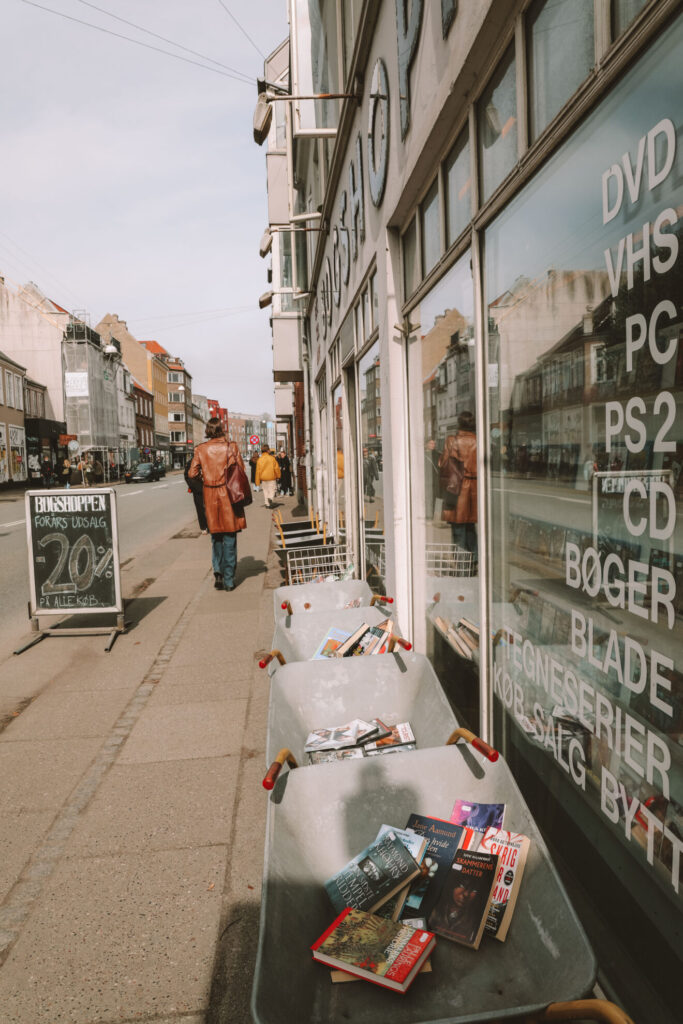
Smaller, more eclectic and slightly chaotic in the best possible way, it embodies the pleasure of literary discovery. Unexpected titles appear where you least expect them. The shelves reward curiosity rather than efficiency.
Bookshops like Bogshoppen preserve something increasingly rare: the possibility of finding a book you were never looking for.
Spartakus
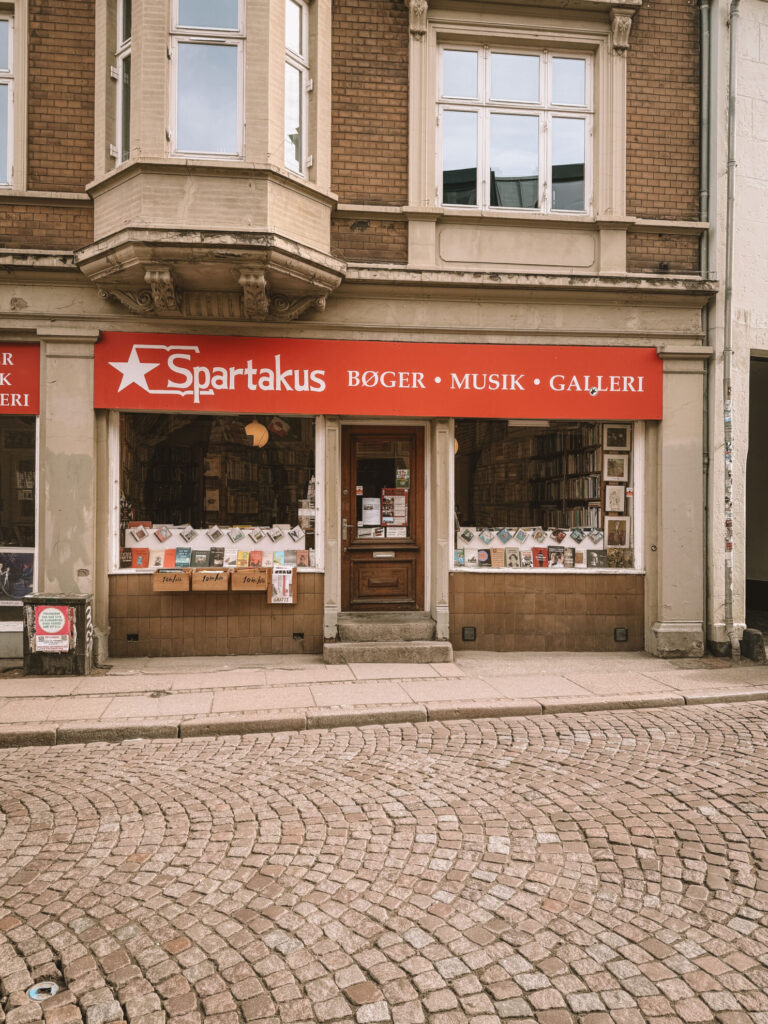
Part bookstore, part record shop and part cultural space, Spartakus reflects the interdisciplinary spirit that runs through much of Aarhus.
Books share space with music, art and independent publications. The result feels less like a conventional store and more like a creative meeting point. It is precisely the sort of place that helps explain why Aarhus appeals to writers, designers and artists.
Love’s Bog & Vincafé

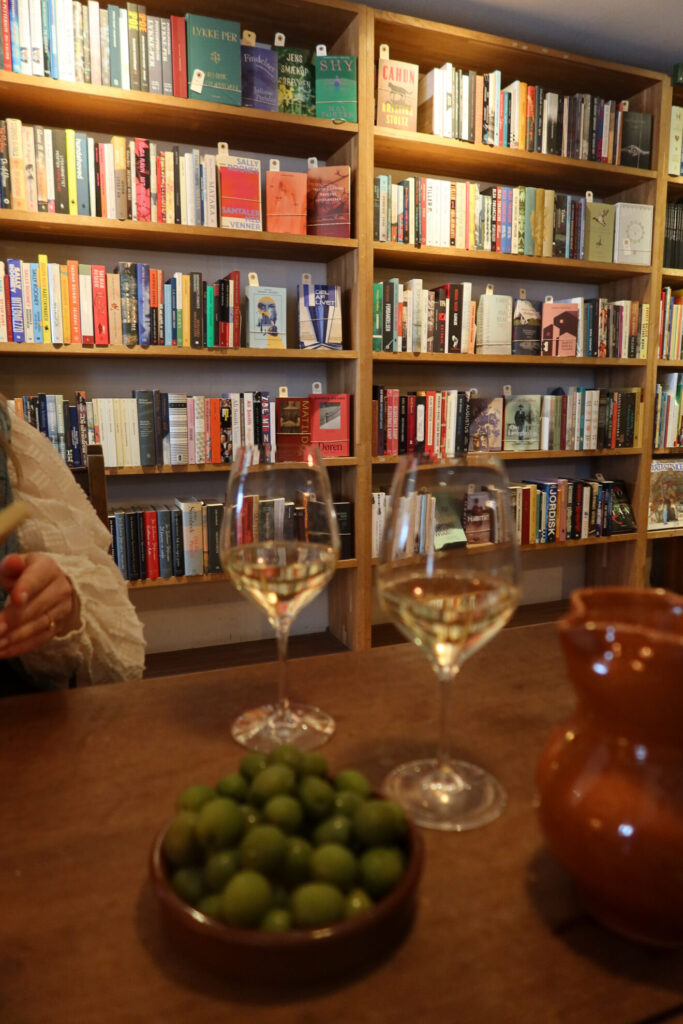
Few places combine books and everyday life as naturally as Love’s Bog & Vincafé. Part bookstore, part wine café and part neighbourhood gathering place, it embodies the idea that literature belongs in conversation as much as on shelves.
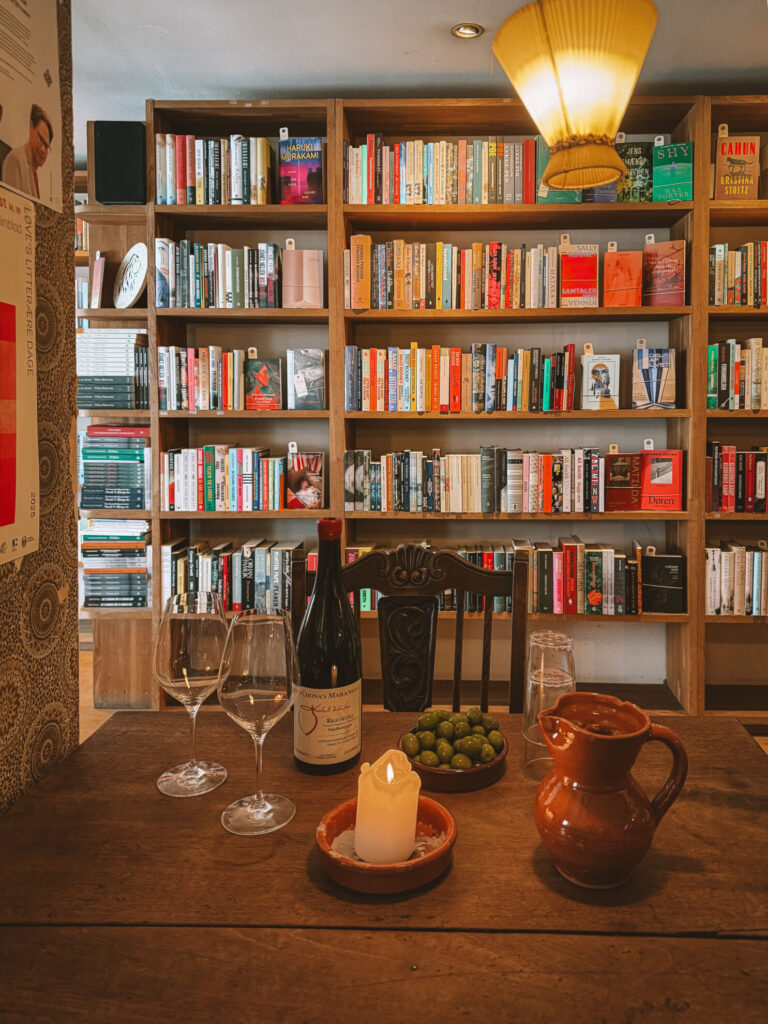
People arrive for books and stay for a glass of wine. Others come for the café and leave with a novel. It is difficult to imagine a more fitting expression of Aarhus’ cultural character.
Coffee, Reading and Scandinavian Comfort
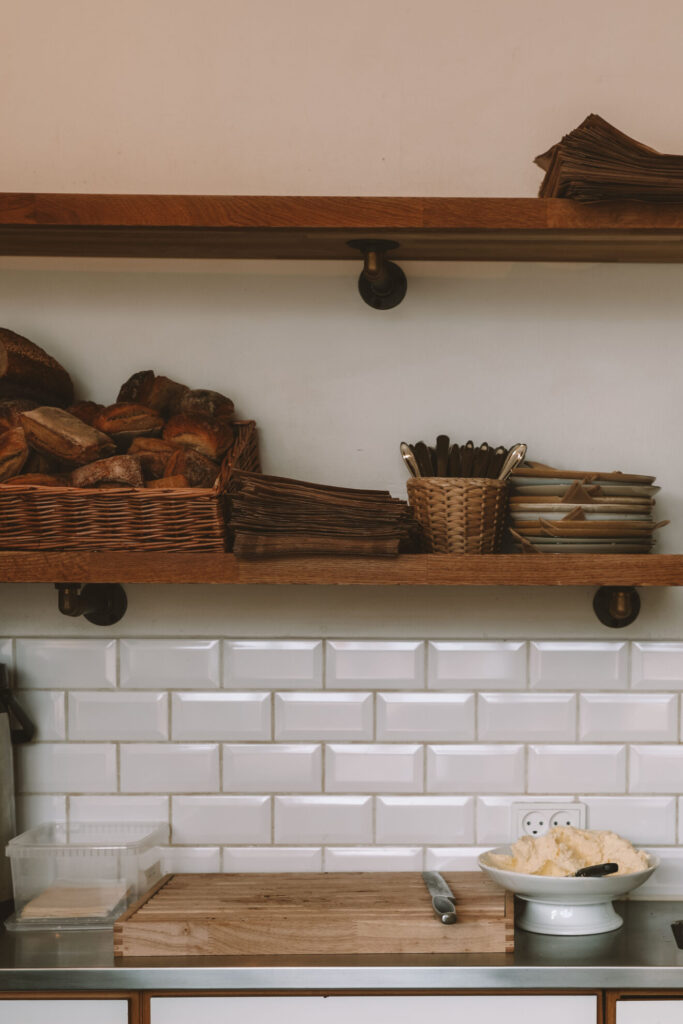
If bookstores form one half of Aarhus’ cultural identity, cafés form the other. The city’s coffee culture is not defined by trends or spectacle. Instead, it is shaped by spaces that encourage people to stay.
This is where the Danish idea of comfort becomes visible. Not as a marketing concept, but as a way of designing environments people genuinely enjoy spending time in.
La Cabra
Few cafés have contributed more to Aarhus’ reputation than La Cabra.
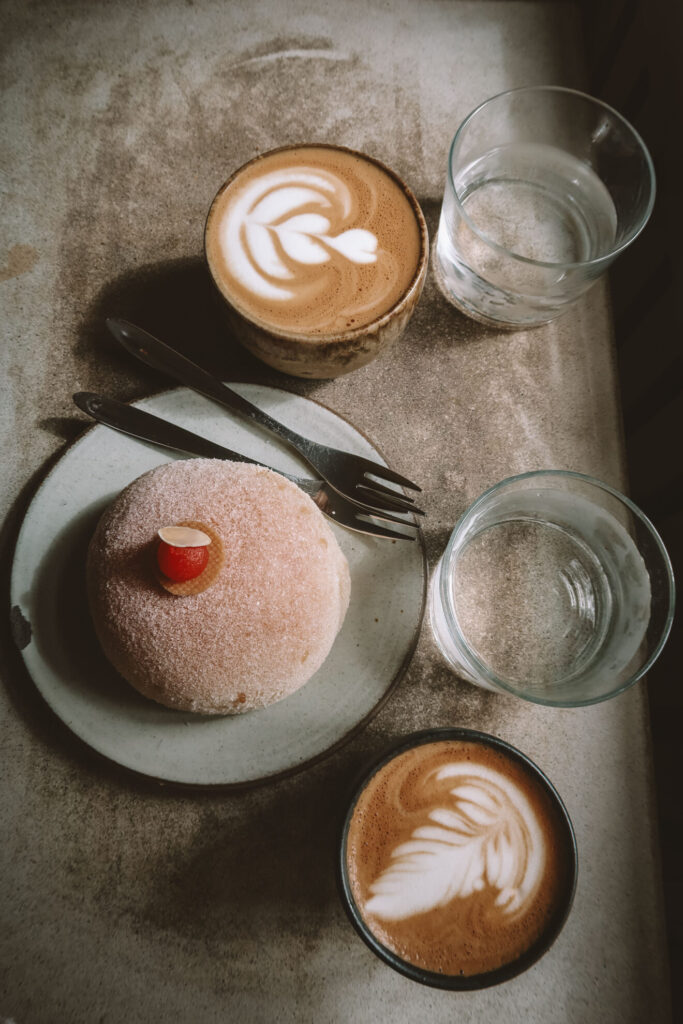
Known internationally among specialty coffee enthusiasts, it helped establish Aarhus as an important destination within contemporary coffee culture. Yet despite its reputation, the atmosphere remains remarkably relaxed.
Natural light, simple interiors and exceptional coffee create a space where reading feels entirely natural. It is common to see customers lingering with books, notebooks or newspapers long after finishing their coffee.
BIRK
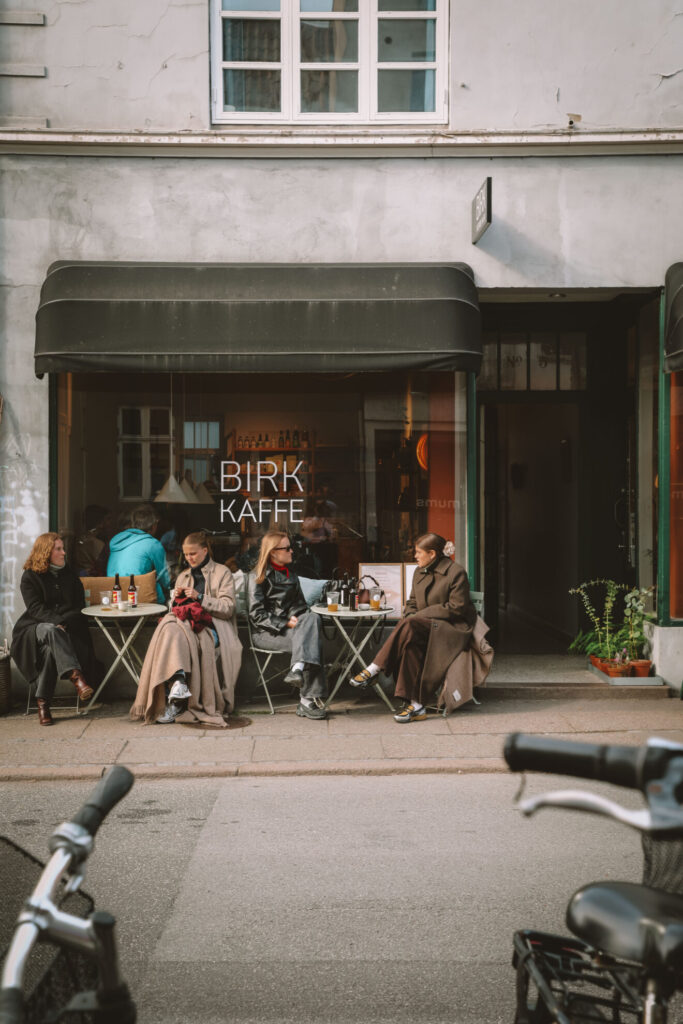
BIRK shares many of the qualities that make Aarhus so appealing. Thoughtfully designed without feeling self-conscious, it combines excellent coffee with an atmosphere that encourages slowing down. The space feels calm, welcoming and deeply connected to the city’s design culture.
Carter
Carter demonstrates another side of Aarhus.
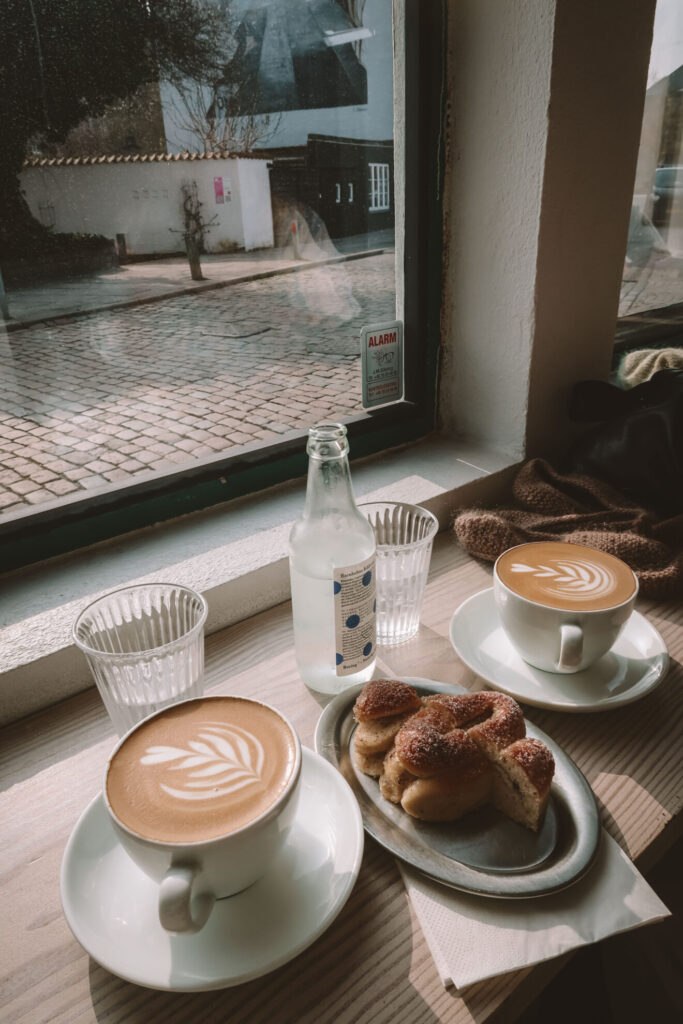
Stylish but unpretentious, contemporary yet comfortable, it captures the balance that defines so much of the city. It feels carefully considered without ever feeling exclusive.
Lige Om Hjørnet and Blød & Sprød
Some of the most memorable cafés in Aarhus are the ones that feel deeply rooted in their neighbourhoods.
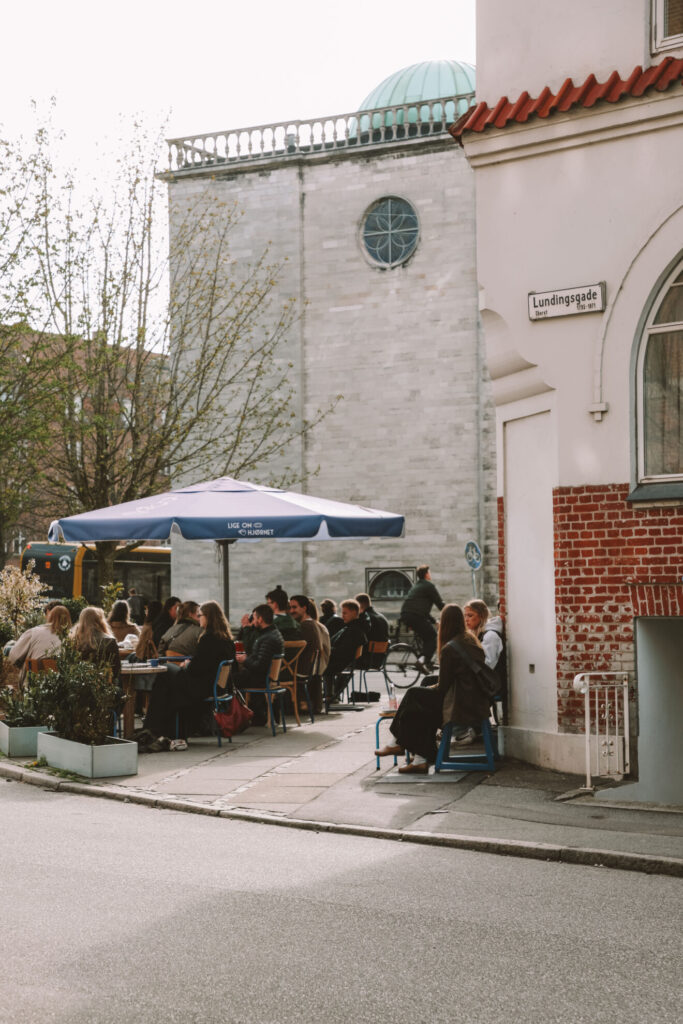
Lige Om Hjørnet and Blød & Sprød are places where daily life unfolds naturally. Locals meet friends, read newspapers and spend slow mornings over coffee and pastries. These spaces may not attract international headlines, but they contribute significantly to the city’s character.
Together, they reveal something important about Aarhus.
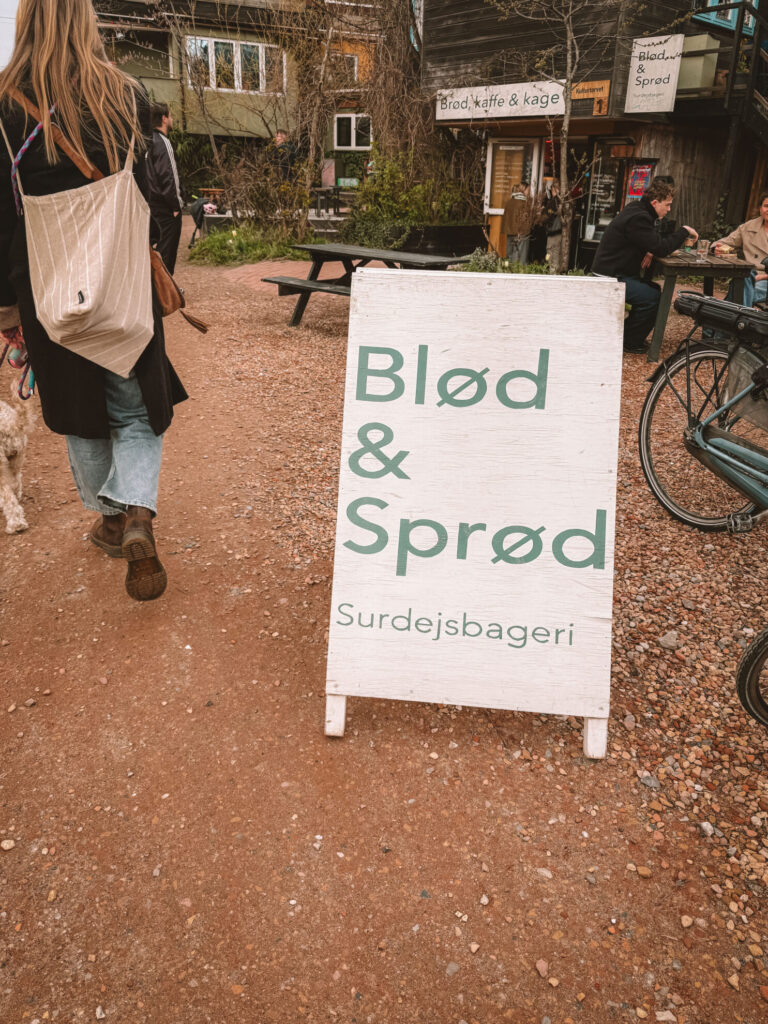
Coffee is not separate from the city’s reading culture. It helps sustain it.
Art and Architecture in Aarhus
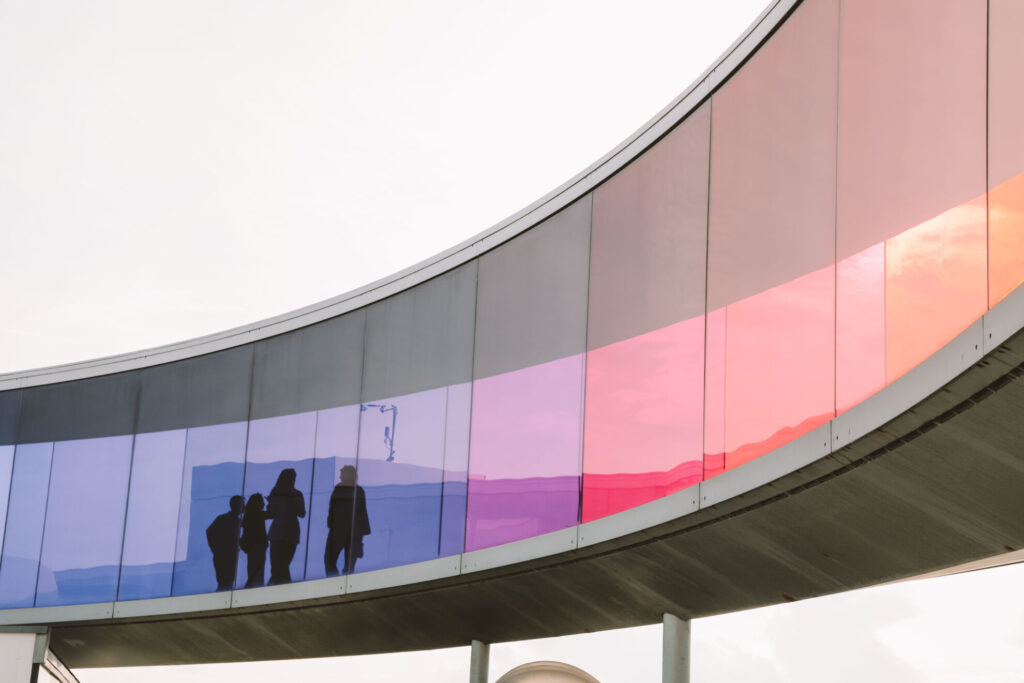
Books and cafés may shape much of the city’s atmosphere, but architecture and art give Aarhus its visual identity.
ARoS stands at the centre of this cultural landscape.
One of Northern Europe’s leading contemporary art museums, it has become internationally recognised for both its exhibitions and its iconic rooftop installation, Your Rainbow Panorama. Yet what makes ARoS particularly successful is its accessibility.
The museum attracts dedicated art enthusiasts, but it also feels welcoming to casual visitors. Like many of Aarhus’ cultural institutions, it avoids the sense of exclusivity that can sometimes accompany major cultural destinations.
Beyond ARoS, good design appears almost everywhere.
The waterfront has been transformed into a vibrant public space. Contemporary buildings coexist comfortably with older streets. Public squares encourage gathering rather than movement. Architecture is used to improve daily life rather than simply create visual impact.
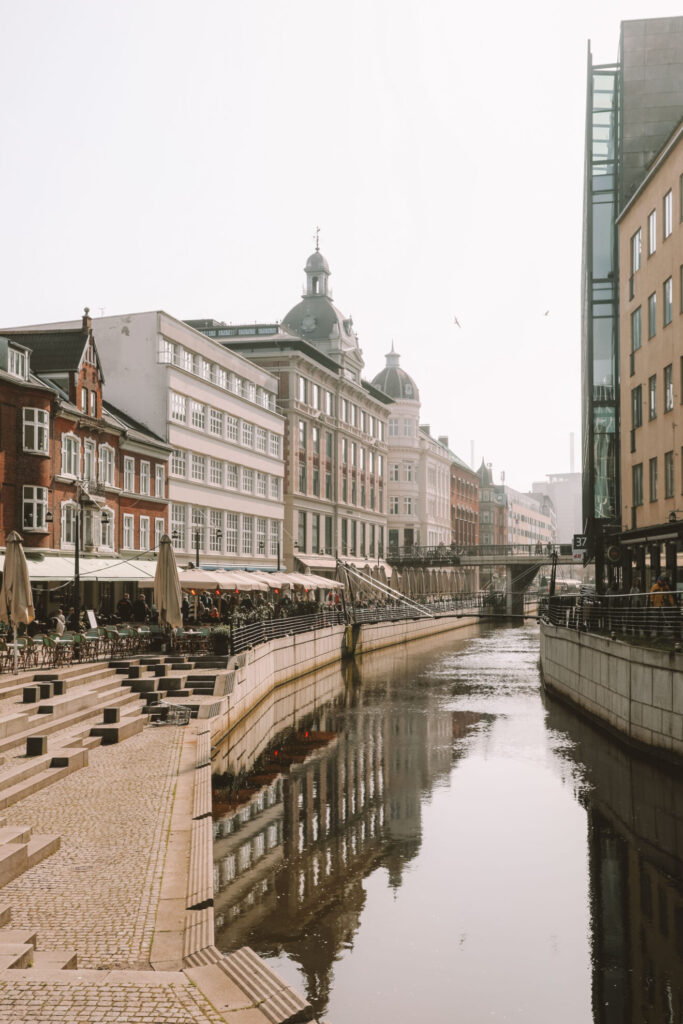
This approach reflects a broader Scandinavian philosophy. Good design should not be reserved for a privileged few. It should make ordinary experiences better. In Aarhus, that philosophy is visible throughout the city.
Why Aarhus Is One of Europe’s Most Underrated Literary Cities
When discussions turn to literary cities in Europe, the same names tend to dominate the conversation. Paris, Dublin, Edinburgh and London all possess extraordinary literary histories.
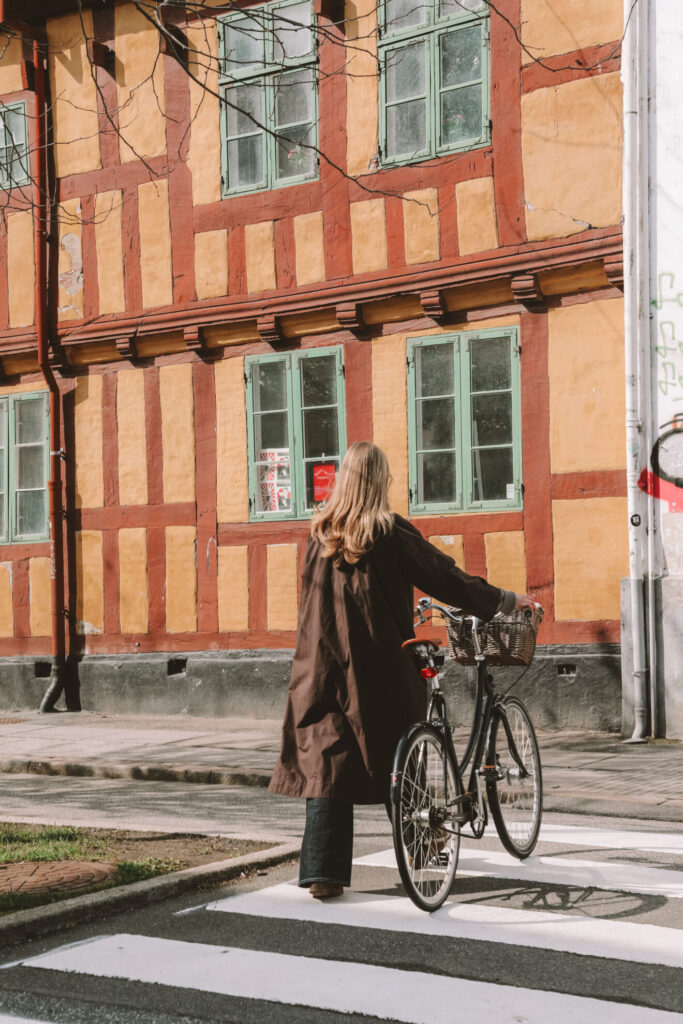
Aarhus offers something different. Its appeal lies not in literary mythology but in literary atmosphere. For readers, the city presents a rare combination of independent bookstores, world-class public libraries, thoughtful cafés, contemporary architecture and a strong culture of everyday reading. These elements reinforce one another, creating an environment where literary culture feels visible and accessible.
What makes Aarhus memorable is not a single museum, café or bookstore. It is the ease with which they connect.
A morning at Dokk1 can lead naturally to an afternoon browsing books at Kristian F. Møller. Coffee at La Cabra might be followed by a walk through the Latin Quarter before ending the day at ARoS. None of these experiences feel isolated from one another. Together, they create a portrait of a city where culture functions as part of ordinary life.
For anyone interested in Aarhus literary travel, that sense of connection is precisely what makes the city so rewarding.
It is not a place that overwhelms visitors with famous landmarks or literary legends. Instead, it demonstrates how books, design, coffee and public space can shape a city in meaningful ways.
Few cities make culture feel this ordinary. And that may be exactly what makes Aarhus extraordinary.
FAQ
Is Aarhus worth visiting for book lovers?
Absolutely. Aarhus combines independent bookstores, a strong reading culture, excellent libraries and cafés that encourage lingering over a book, making it one of the most rewarding destinations for book lovers in Northern Europe.
What are the best bookstores in Aarhus?
Kristian F. Møller, Bogshoppen, Spartakus and Love’s Bog & Vincafé are among the most interesting bookstores in Aarhus, each offering a different perspective on the city’s literary culture.
Is Aarhus a literary city?
Yes. While Aarhus is not traditionally known as a literary capital, it has a vibrant contemporary reading culture supported by bookstores, libraries, universities and public spaces designed for learning and conversation.
How many days should you spend in Aarhus?
Three to four days is ideal. This allows enough time to explore the city’s bookstores, cafés, museums, architecture and waterfront neighbourhoods without rushing.
What makes Aarhus different from Copenhagen?
Aarhus feels smaller, more intimate and easier to navigate. While Copenhagen offers the scale of a capital city, Aarhus provides a more connected experience where books, coffee, design and culture are concentrated within a highly walkable urban environment.
For more literary travel inspiration, explore my other guides to literary places, beautiful libraries, and bookstores around the world.
If you enjoy discovering unique bookstores, you might also like this guide to the most beautiful libraries in Europe.